
When setting up a laundry facility, many people start by looking for “the best washers and dryers,” only to find that paying more does not guarantee a better fit. Too little capacity means working overtime throughout peak season. Oversized machines waste water and electricity on ordinary days. Choosing equipment for the wrong setting can create problems too. A standard washer-extractor may fail to meet hospital compliance requirements, while customers at a self-service laundromat may struggle to operate a complicated industrial machine. Start by identifying what your operation needs, then choose the washers and dryers that fit.
Different laundry facilities have different priorities. Hotels care about efficiency and how their linens look. Hospitals prioritize hygienic separation. Self-service laundromats need durable equipment that can operate unattended. Small guesthouses value ease of use and low upfront costs. Here is how to choose washers and dryers for each setting.
What Type of Laundry Facility Do You Have?
Start by identifying the type of laundry facility you operate. Each setting calls for a different approach to equipment selection.
Small on-site laundry. Guesthouses, apartment buildings, and small staff dormitories with 10 to 30 rooms generally handle modest daily volumes and prioritize low upfront costs and straightforward operation.
Mid-sized commercial laundry. Hotels with 50 to 200 rooms and factories that wash employee uniforms may process several hundred kilograms per day. Efficiency, energy use, and reliability are the main priorities.
Commercial linen processing plant. These facilities process several metric tons per day, handling bulk linen loads for hotels and restaurants. The key measures are throughput, turnaround time, and cost per unit.
Healthcare or hygiene-grade laundry. Hospitals, nursing homes, pharmaceutical plants, and similar facilities face strict compliance requirements and must prevent cross-contamination.
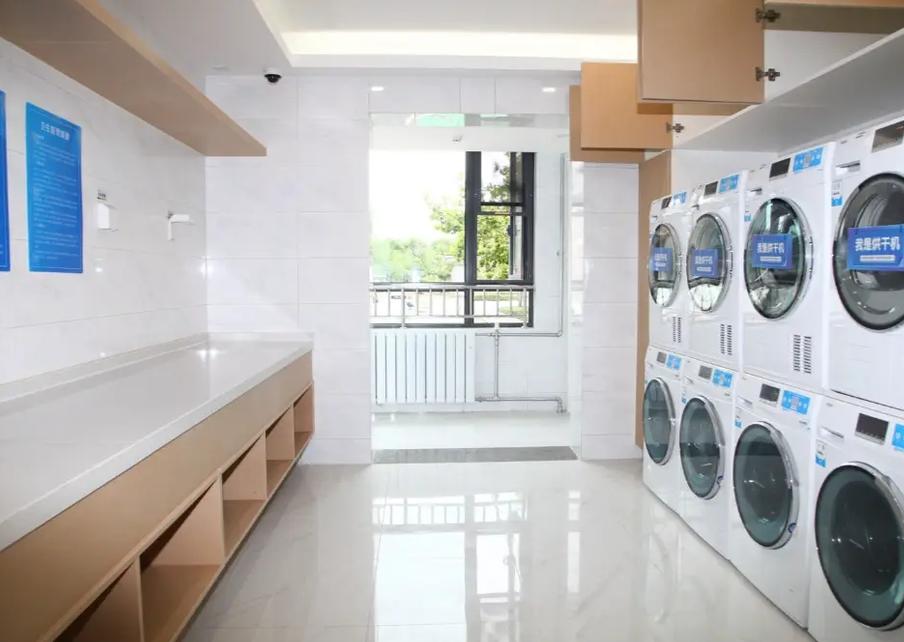
Self-service laundromat. Equipment must be durable and easy for customers to operate, ideally with self-service payment options.
Recommended Reading:How to Choose the Right Laundry Equipment for a 100-Room Hotel
How to Choose a Commercial Washer
Commercial washers vary widely in construction, features, and intended use, as well as capacity. Prices range from a few thousand to tens of thousands of U.S. dollars.
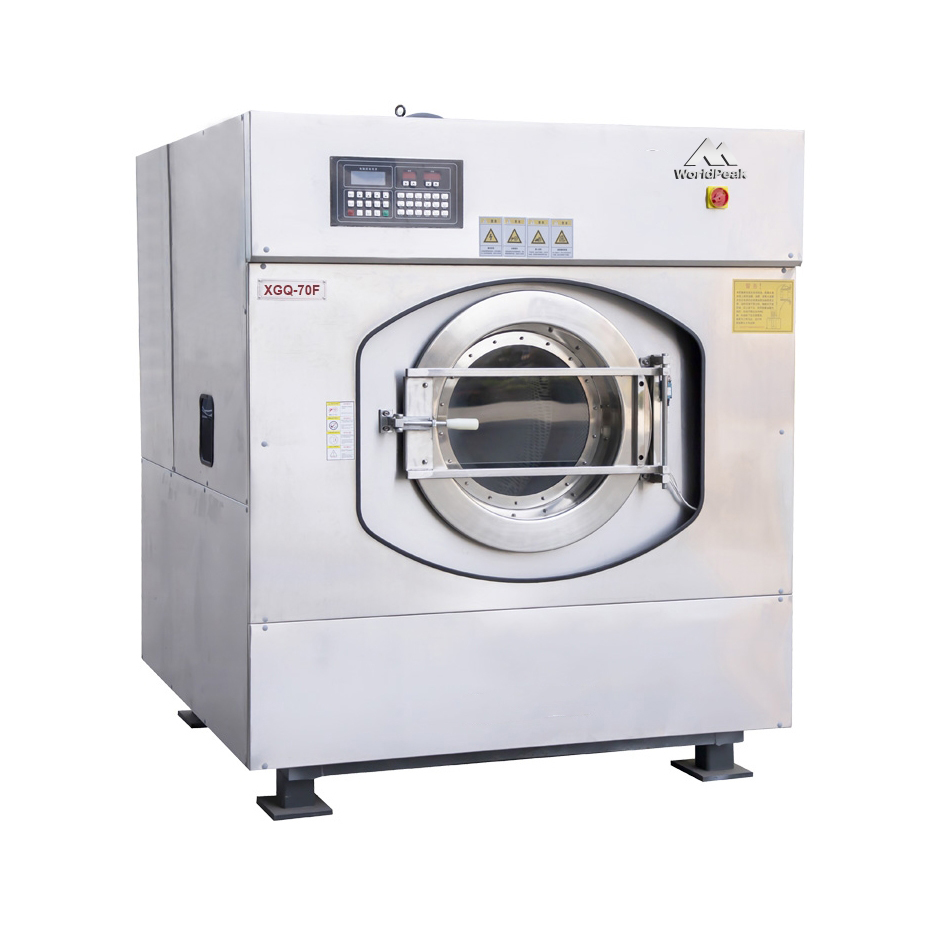
Fully Automatic Horizontal Washer-Extractor
Often called an industrial washer-extractor, this front-loading drum machine washes, rinses, and spin-extracts in a single programmed cycle. It is the most common type of washer in hotels, commercial linen plants, and staff dormitories.
Models range from 15 to 300 kg. The automated cycle eliminates the need to transfer linens partway through the process, and high-G extraction removes more moisture, shortening drying time. Fully suspended models absorb vibration and can be installed without anchor bolts, which also makes upper-floor installations possible.
Approximate prices are as follows.
15 to 30 kg entry-level models cost $3,000–$6,000 per machine.
Standard 50 kg models cost $7,000–$12,000 per machine.
High-capacity 100 kg models cost $10,000–$18,000 per machine.
Chinese brands generally cost less, while European and American industrial brands tend to cost more. The price difference mainly reflects materials, motors, suspension design, and quality control.
Barrier Washer-Extractor
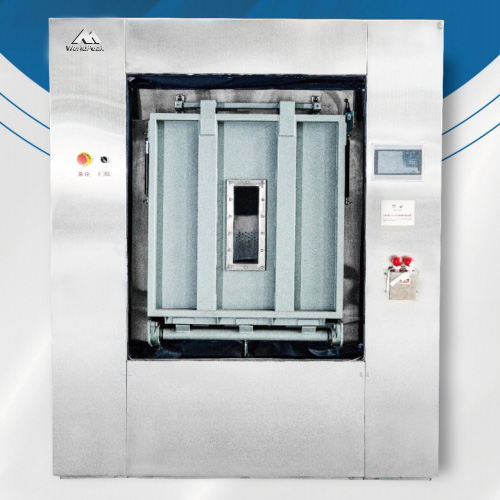
A barrier washer-extractor, also called a double-door or pass-through washer-extractor, has a door on each side and is installed in a partition wall. Soiled linens go in on the soiled side, and washed linens come out on the clean side. This physically separates the two areas.
For hospital infectious disease units, biopharmaceutical plants, food processing facilities, and cleanrooms, this equipment improves hygiene and is often required for compliance. It typically costs 30% to 50% more than a standard washer-extractor of the same capacity. A 50 kg barrier model, for example, costs about $12,000–$20,000 per machine.
Commercial Self-Service Washer
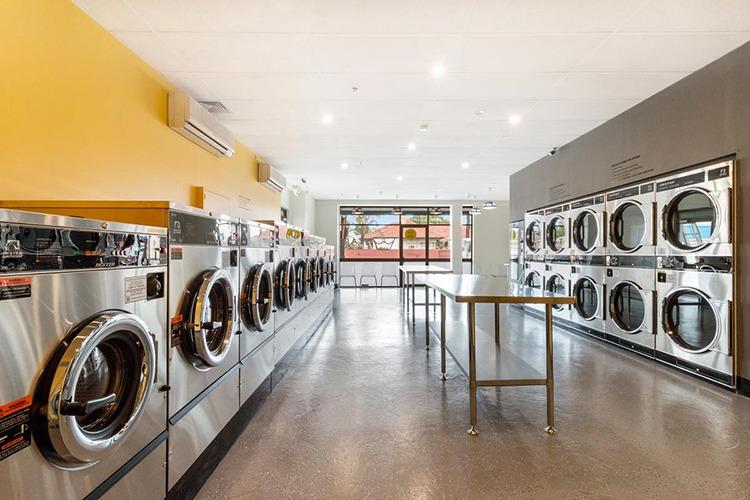
These top-loading or front-loading machines are designed for customers to operate themselves. They support coin, card, or mobile payments, have clear controls, and are built to withstand frequent use by many different people.
Self-service models are a better fit than standard industrial washer-extractors for laundromats and shared laundry rooms in apartment buildings or dormitories. Approximate prices are as follows.
Small 20 to 30 lb models cost $2,000–$4,500 per machine.
Large 40 to 50 lb models cost $4,000–$8,000 per machine.
Major American brands generally offer greater durability and more widely available parts, while Chinese brands tend to offer better value for the purchase price. New laundromats can choose based on their budget and access to service.
Semi-Automatic Horizontal Washer
A semi-automatic horizontal washer has a simple design and primarily handles washing. Staff must manually transfer the laundry to a separate spin extractor. Its low purchase price and straightforward maintenance make it suitable for textile printing and dyeing plants, basic workwear washing, or small workshops with tight budgets.
Limited automation makes it labor-intensive and a poor fit for hotels and linen plants that need continuous, efficient production. A 50 kg model costs about $3,000–$5,000 per machine, with a separate spin extractor also required.
How to Choose a Dryer
It's easy to focus on capacity when choosing a dryer, but the heating method has a major effect on operating costs and drying efficiency. The best heating method depends on the energy sources available at your site.
Steam-Heated Dryer
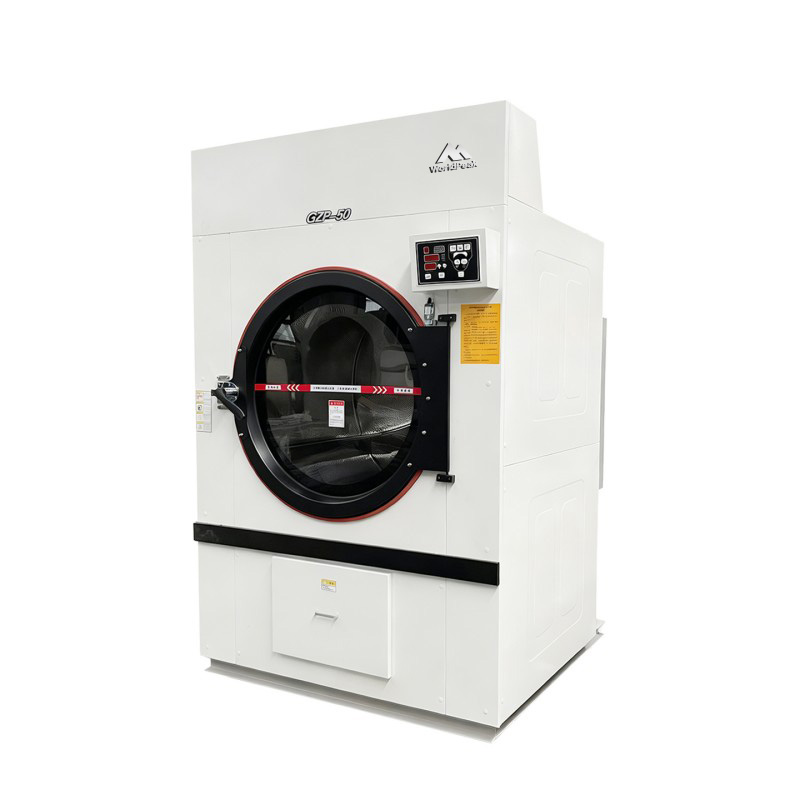
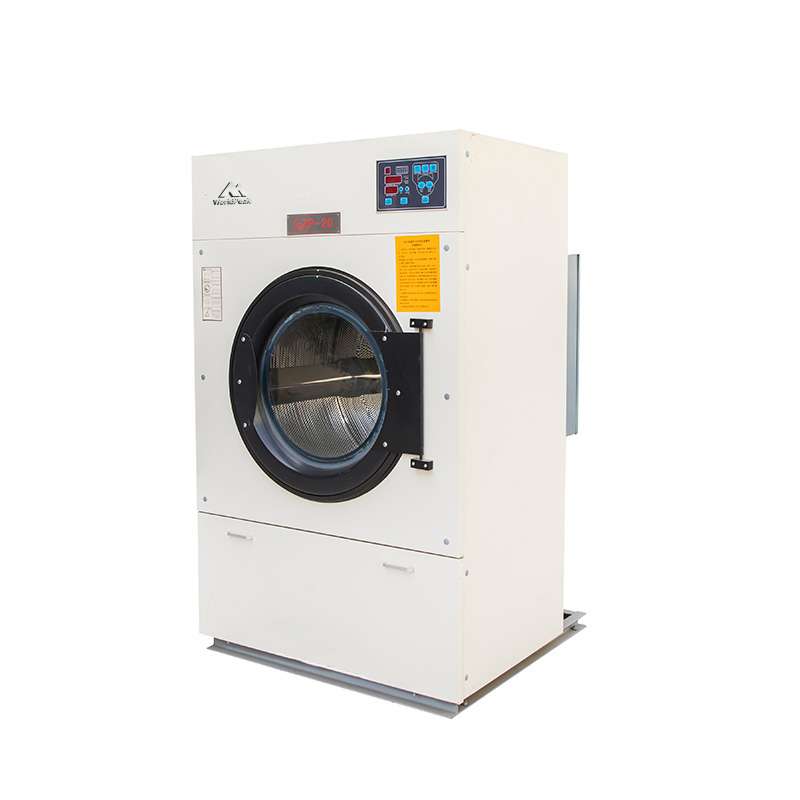
A steam-heated dryer uses a steam coil to heat the air. The steam usually comes from a boiler or a central steam line. If your hotel or laundry facility already has a steam supply, this type of dryer is often the most practical choice.
Operating costs are relatively low, and gentler heating makes linens less likely to yellow or stiffen. The absence of an open flame also makes the dryer safer to use on the laundry floor. It does require a steam source, and installing a boiler solely for the dryer can be too expensive.
Approximate prices are as follows.
50 kg models cost $6,500–$11,000 per machine.
100 kg models cost $11,000–$19,000 per machine.
Electric Dryer
An electric dryer uses resistance heating elements to warm the air. Installation is straightforward because the machine runs on electricity and requires no fuel piping or combustion exhaust. It is a convenient option for small guesthouses, apartment buildings, and laundry facilities with modest daily volumes.
Electric dryers typically have the highest operating costs. Electricity can cost two to three times as much as steam, and electric models also tend to heat up more slowly. They are better suited to small operations than to continuous, high-volume drying.
An electric dryer generally costs about 10% less than a steam-heated model of the same capacity. A 50 kg model costs around $6,000–$10,000 per machine.
Direct-Fired Gas Dryer
A direct-fired gas dryer burns natural gas to heat the air directly, so it heats up quickly and dries efficiently. Where natural gas prices are favorable, it can cost much less to run than an electric dryer and may approach the operating cost of a steam-heated model.
Gas dryers require a gas line, more demanding installation, and proper exhaust and ventilation. Poor heat control can cause localized overheating and yellow towels. This type is best suited to mid-sized hotels and linen plants with reliable gas service and no steam supply.
A direct-fired gas dryer typically costs 10% to 20% more than a steam-heated dryer of the same capacity. A 50 kg model costs around $7,500–$13,000 per machine.
All-in-One Washer-Dryer
An all-in-one washer-dryer washes, spin-extracts, and dries in the same machine, saving floor space. It can serve as an interim solution for a guesthouse with 10 rooms or fewer and very limited space.
Drying capacity is limited, and the machine cannot wash one load while drying another. A single component failure can also put the entire unit out of service. As laundry volume grows, separate washers and dryers are usually the more reliable choice. A 15 kg all-in-one model costs about $4,000–$8,000 per unit.
How to Equip Different Types of Laundry Facilities
Use these configurations as a starting point for sizing equipment in common laundry settings.
Small Guesthouse or Apartment Building With 10 to 30 Units
Pair one 15 to 25 kg fully automatic washer-extractor with one 20 to 30 kg electric dryer.
Daily laundry volumes are modest in this setting, and an electric dryer is convenient because it needs no boiler. An all-in-one washer-dryer is another option when space is especially tight, though separate machines handle laundry more efficiently over time.
Budget around $10,000–$18,000 for the full equipment package.
Mid-Sized Hotel With 50 to 150 Rooms or a Factory Laundry
Use two 50 kg fully automatic washer-extractors, two 50 to 70 kg dryers, and one single-roll flatwork ironer.
Two washer-extractors let you separate different types of linens, and either machine can serve as a backup for the other. Choose steam-heated dryers if the site has a steam supply. Gas dryers are a better fit when steam is unavailable. The flatwork ironer keeps sheets and duvet covers smooth and presentable.
Budget around $50,000–$80,000 for the full equipment package.
1,000 or More Linen Sets per Day
Use two to three 100 kg fully automatic washer-extractors, three to four 100 kg dryers, a flatwork ironer, and folding equipment.
Commercial linen plants depend on steady throughput, so high-capacity washers and dryers must be matched with finishing equipment. Balance the capacities of the washers, dryers, and ironers. If drying or ironing falls behind, a faster wash stage will do little to improve overall output.
Larger plants should also consider a continuous batch washer, commonly called a tunnel washer. For small and mid-sized plants, the more practical first step is to size individual machines to work together and streamline the workflow. The full equipment package typically costs $150,000–$300,000 or more.
Hospital or Healthcare-Grade Laundry
Pair barrier washer-extractors with hygiene-grade dryers and lay out the facility with separate clean and soiled areas.
Compliance comes first in healthcare laundry equipment selection. Double-door barrier machines help reduce cross-contamination. High-temperature washing and dedicated hygiene cycles are also needed to meet the requirements of hospitals, nursing homes, or pharmaceutical plants. This configuration typically costs about 30% more than a standard setup.
Self-Service Laundromat
Use front-loading self-service washers in a range of capacities with matching dryers. Aim for roughly 1.2 to 1.5 dryers per washer.
Offer a mix of washer sizes. Small machines handle everyday clothing, medium machines accommodate bedding and heavy coats, and a few large machines cover bulky items such as comforters and curtains. Providing more dryers than washers helps prevent queues after the wash cycle.
For a typical laundromat with around 10 washers, budget approximately $60,000–$100,000 for the full equipment package.
Equipment Selection Principles for Every Type of Laundry
Allow for Extra Capacity Without Oversizing
Leave room for peak-season demand, maintenance downtime, and unexpected increases in volume. Oversized machines that regularly run with partial loads still waste water and electricity. Linens may also tumble less effectively, reducing wash quality. A capacity buffer of 20% to 30% is generally sufficient.
Dryers Usually Need a Little More Capacity Than Washers
After spin extraction, linens fluff up and take up considerably more space. A dryer with the same rated capacity as the washer may struggle to fit the full load or dry it evenly. As a starting point, look for a dryer with about 1.2 times the washer's capacity.
Compare Lifetime Costs Alongside Purchase Prices
Laundry equipment can last for years. The total cost includes the purchase price, electricity, steam, repairs, linen wear, and losses from downtime. A more expensive machine can cost less over its lifetime if it is more durable and energy-efficient.
Give Local Service More Weight Than Brand Recognition
Every day a machine is down costs you a day of production. Equipment with a local service provider who can inspect and repair it promptly may be worth a higher purchase price. In remote areas especially, longer waits for parts can mean larger losses.
Choose Widely Used Models When Possible
Parts are usually easier to find for widely used models, and repair technicians are more likely to know how to service them. A less common machine may look good on paper, but scarce parts and long repair times can create real operating risks.
Frequently Asked Questions
1. Why Is a 1:1 Washer-to-Dryer Ratio Usually Discouraged?
Drying generally takes longer than washing. If there are too few dryers, linens pile up at the drying stage and slow the entire operation. Commercial laundries generally aim for at least 1.2 dryers per washer, while self-service laundromats can go up to 1.5.
2. Which Costs Less Over Time, Steam, Electricity, or Gas?
With a reliable steam supply already in place, steam is usually the least expensive option. Electric dryers are the most convenient to install and typically have the highest long-term operating costs. Gas dryer economics depend on local gas prices. With favorable rates, gas can be an efficient alternative to steam.
3. Is an All-in-One Washer-Dryer a Good Fit for a Small Laundry?
It can work for a property with 10 rooms or fewer and very limited space. The drying capacity is limited, and the machine cannot wash and dry at the same time. A breakdown also takes both functions out of service, so separate machines generally offer better long-term reliability.
4. Is It Worth Buying Used Washers and Dryers?
Used machines can save a substantial amount upfront if someone with repair experience can verify their service history, how long they have been in use, and the condition of the bearings and water seals. If you are new to the business and lack trusted suppliers or the expertise to assess used equipment, a new machine with a warranty can help keep future repair costs under control.
The right washers and dryers depend on the operation. Small guesthouses prioritize ease of use, hotels need reliable equipment, linen plants focus on throughput, hospitals prioritize compliance, and self-service laundromats need durable machines with simple controls.
Choose equipment that fits your laundry volume, available energy sources, site constraints, and long-term budget. Once you know what your operation needs, you can compare machine types, heating methods, and local service options with greater confidence.