
Many owners of newly opened guesthouses and small hotels initially consider buying a few large-capacity household washing machines to wash their linens and save on costs. They all seem to do the same job, and household machines cost only a fraction of the price of industrial models, making them look like a bargain. But once they put them to work, problems start appearing after just a few loads, drying cannot keep up, and linens wear out faster. When all the costs are added up, they end up losing more money.
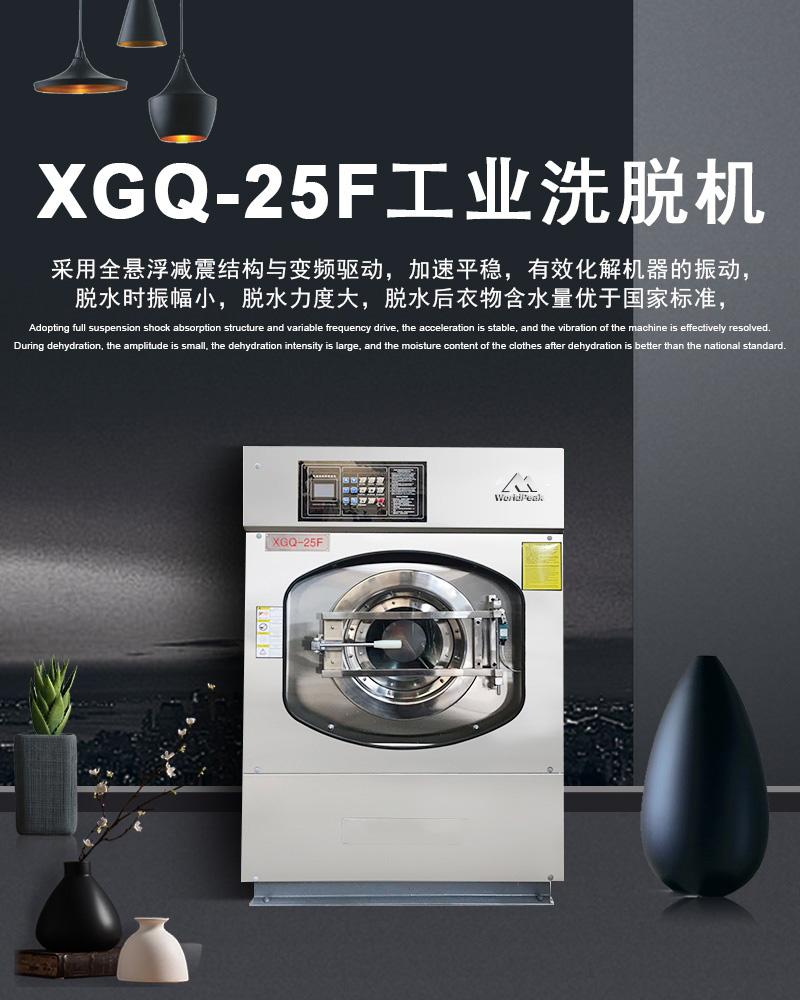
Industrial and household washing machines may appear to operate on similar principles, but their intended applications, materials, and construction follow two entirely different paths. One is built for light household use once or twice a day; the other is designed for continuous, intensive operation for more than eight hours a day. Below, we explain the differences across seven key areas to help you decide which type suits your needs.
Differences Between Industrial and Household Washing Machines
Different Design Priorities
Intermittent Use vs Continuous Operation
This is the most fundamental difference between the two, and every other difference stems from it.
Household washing machines are designed for use four or five times a week, with one or two cycles a day. Their components are selected for light loads and intermittent use. The motor, bearings, and seals do not need to withstand the stress of prolonged continuous operation; they simply need to be adequate for normal household needs.
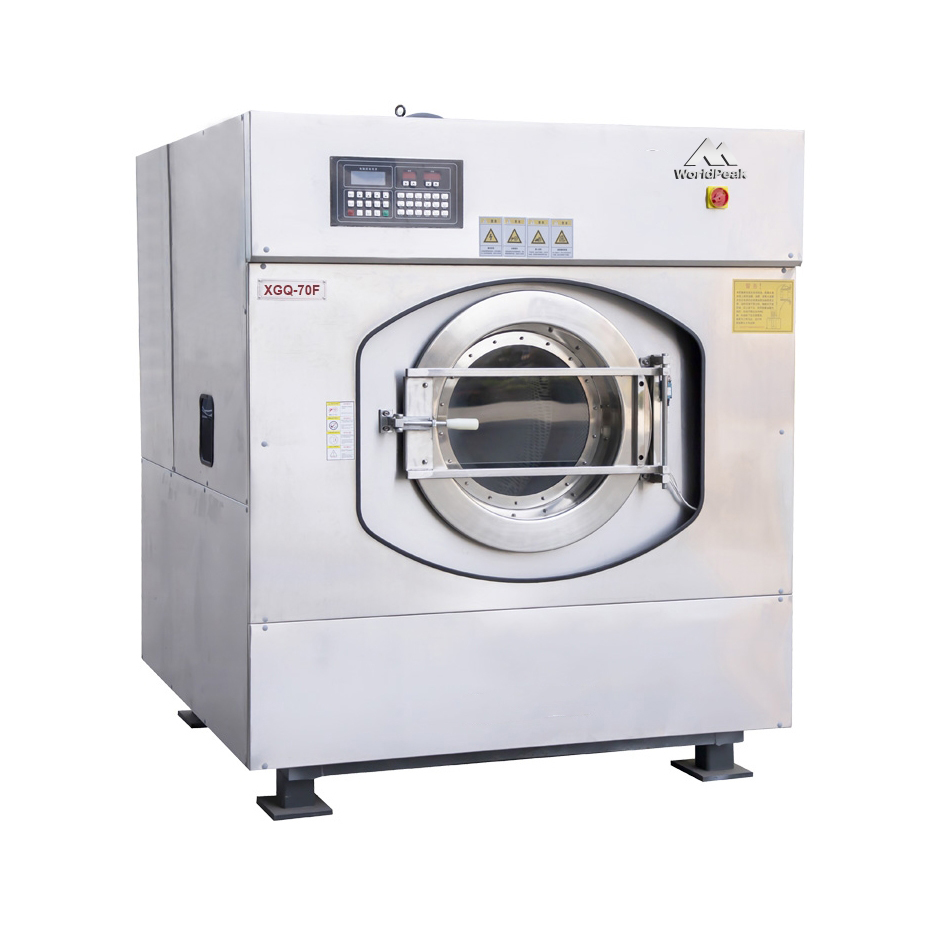
From the outset, industrial washing machines are designed for commercial workloads of 8-12 hours a day, year-round. They use heavy-duty industrial motors, larger and thicker bearings and water seals, and reinforced frames to handle the nonstop daily demands of commercial laundries and hotels. Simply put, household machines are made for occasional use, while industrial machines are built to work hard every day.
Many people underestimate this difference and put household machines through commercial workloads. The result is often an overheated, burned-out motor or worn bearings and water leaks within two or three months. Add up the repair bills, and buying a small industrial machine from the start would have been more economical.
Capacity and Efficiency
Careful Washing of Small Loads vs Efficient Processing of Large Batches
The capacity gap is the most obvious difference. Most household washing machines have capacities of 5-13 kg, and even the largest flagship household models are limited to the teens in kilograms. These are largely nominal ratings, and actual washing performance at full capacity is often poor. This capacity is perfectly adequate for the everyday laundry of a family of three, but it falls short when handling hotel linens. A single duvet cover and two towels can already weigh several kilograms, so only a few sets can be washed at a time.
Industrial washing machines start at 15 kg, with larger models available in 30, 50, and 100 kg capacities. Large commercial laundries may even use 200 or 300 kg machines. A single 100 kg washer-extractor can wash the linens from more than a dozen guest rooms in one load, completing each load in 40-50 minutes and handling seven or eight loads a day. Household machines simply cannot match that productivity.
Processing efficiency is even more important. Industrial wash programs are designed for maximum efficiency, with tightly coordinated main wash, rinse, and extraction stages. A complete cycle for standard cotton fabrics can be finished in around 40 minutes. Household machines, which also prioritize gentle fabric care, often take more than an hour per cycle. The gap becomes increasingly significant when washing large volumes.
Materials and Construction
Lightweight Household Construction vs Heavy-Duty Industrial Construction
The biggest differences in materials are found in the parts you cannot see.
Household washing machines prioritize low weight and cost control. Many use engineering plastics for the outer tub. Although the inner drum may be stainless steel, the sheet metal is thin, and the cabinet is usually made from thin painted steel. The overall construction is relatively lightweight and works well for normal household use, but prolonged exposure to industrial detergents and bleach can greatly accelerate corrosion.
In industrial washing machines, virtually all parts that come into contact with water are made from 304 stainless steel. The inner drum is generally made from sheet metal at least 1.5 mm thick, with smoothly finished perforation edges to resist detergent corrosion and reduce the risk of snagging linens. The frame is welded from heavy structural steel, making the machine several times heavier than a household model of the same capacity and providing stability during high-speed extraction.
For a clear example, a 10 kg household washing machine typically weighs only 70-80 kg, while an industrial washer-extractor with the same capacity can weigh 400-500 kg. The strength of their construction is on a completely different scale.
Water Extraction Performance
Standard Spin-Drying vs Efficient High-G Extraction
Water extraction performance is easy to overlook, but it directly affects subsequent drying costs.
Household washing machines generally spin at 800-1,400 rpm. Although those numbers may seem high, their smaller drum diameters mean that actual extraction forces are usually below 100 G. Linens retain a high moisture content after spinning and come out very wet, requiring longer drying times and more electricity.
Industrial washer-extractors commonly achieve extraction forces above 300 G, with high-end models reaching 350-400 G. This high centrifugal force removes much more water from linens, reducing residual moisture content to below 50%. Do not underestimate the difference: every 5% reduction in linen moisture content can shorten drying time by around 15%. For hotels and commercial laundries drying large volumes of linens every day, this can make a difference of tens of thousands in annual energy costs.
Features and Programs
Household Fabric Care vs Professional Commercial Washing
Household washing machine programs are built around the fabric care needs of everyday clothing. They focus on protecting fabrics and minimizing wear, with dedicated settings for wool, silk, baby clothes, and more, emphasizing specialized, gentle washing.
Industrial washing machine features, by contrast, are designed entirely around commercial laundry requirements:
High-temperature heating, with many models able to raise the water temperature above 90°C to meet the disinfection and sanitization requirements of hotels and hospitals;
Compatibility with automatic chemical dosing systems for precise dispensing of main-wash detergent, bleach, fabric softener, and neutralizing acid, ensuring consistent results from one batch to the next;
Programmable logic controller (PLC) controls that can store more than a dozen custom programs, allowing sheets, towels, workwear, and healthcare textiles to be washed using their own settings, with workers simply pressing a button to start;
A focus on stain removal and processing efficiency, with programs optimized for stubborn stains commonly found in commercial settings, such as heavy grease, blood, and food stains.
Simply put, household machines aim to wash gently, while industrial machines aim to wash thoroughly, quickly, and consistently.
Installation and Supporting Infrastructure
Plug-and-Play Setup vs Professional Installation
Household washing machines are very easy to install. Connect the water supply and a 220 V household power source, level the machine, and it is ready to use. Most people can install one by following the instructions.
Installing an industrial washing machine is a small engineering project. To begin with, it requires a 380 V three-phase industrial power supply, and many older properties will need an electrical capacity upgrade. The equipment itself is heavy. Fully suspended models are relatively straightforward, but rigid-mounted models also require anchor bolts and foundation reinforcement. Steam-heated models need steam piping, and installations on upper floors require a check of the floor's load-bearing capacity.
Drainage, ventilation, and sound insulation must also be considered, while large laundries need supporting wastewater treatment facilities. Many newcomers overlook these infrastructure costs at the beginning, only to discover after purchasing the equipment that it cannot be installed or put into operation.
Service Life and Total Lifecycle Cost
Many people look only at the purchase price and assume household machines are far cheaper. But when the full lifecycle cost is calculated, the conclusion is often reversed.
Household washing machines have a design life of roughly 3,000 cycles and can last five to eight years under normal household use. In a commercial setting with daily operation, however, they may reach that design limit in just one year. Frequent breakdowns and ongoing repairs follow, and the machine may need to be scrapped within two or three years.
Industrial washing machines generally have a design life of more than 30,000 cycles. With normal maintenance, 10-15 years of service is common, and well-maintained machines can last even longer. Although the initial purchase price is higher, the annualized equipment cost is actually quite modest. Their lower failure rate also reduces the risk of frequent downtime disrupting business.
Then factor in energy consumption and linen wear. Better extraction reduces drying energy use, while better drum construction minimizes linen wear and extends linen life. Over the long term, industrial machines can therefore have a lower overall operating cost. This is why established hotels and commercial laundries do not rely on household machines as substitutes, even when their volumes are relatively small. The initial purchase savings fall far short of covering the problems that arise later.
When Should You Choose an Industrial Washing Machine?
This does not mean household machines are never suitable. The key is how intensively they will be used. For a small guesthouse with three to five rooms, washing three to five linen sets a day, a household machine can handle the workload at a lower cost.
However, if any of the following applies, it is advisable to choose an industrial machine from the start:
Average daily laundry volume exceeds six sets of guest-room linens;
The equipment runs for more than three hours a day;
High-temperature disinfection or the processing of heavily soiled linens is required;
You plan to operate for the long term and prioritize equipment reliability and linen service life.
If your initial budget is limited, you can start with a smaller industrial model, such as a 15 kg or 30 kg machine. These are relatively affordable while offering a clear step up in durability and efficiency over household models. Adding more equipment as business grows is also a more dependable approach.
Frequently Asked Questions (Q&A)
1. Can a small guesthouse washing 8-10 sets of linens a day get by with several household machines?
They can work as a short-term solution or provide temporary extra capacity during peak season, but they are not recommended for long-term operation. Two 10 kg household machines can wash at most 3-4 linen sets at a time, with each load taking nearly one hour. Washing 10 sets a day requires three rounds, making the labor involved poor value. In addition, when run at full capacity every day, most household machines begin experiencing frequent breakdowns after just over a year. Once repair costs and lost room revenue are included, the savings are limited. If you plan to stay in business for the long term, even on a small scale, a compact 15-20 kg industrial washer-extractor offers much more dependable efficiency and durability.
2. Do industrial washing machines use much more water and electricity than household machines?
In terms of total water and electricity used per cycle, an industrial machine certainly uses more. But calculated per kilogram of linens, industrial machines are actually more efficient. A household machine washing 10 kg of laundry still uses a considerable amount of water and electricity over a complete cycle. Thanks to optimized water levels and high-G extraction, the energy consumption per kilogram when an industrial machine washes 100 kg of linens is more than 30% lower than when the same amount is washed in 10 separate household-machine loads. Industrial machines have a clear energy advantage when processing large volumes. At smaller volumes, the energy disadvantage of household machines becomes less significant, which is one reason very small guesthouses can use them as a temporary solution.
3. How long will a household washing machine usually last if used to wash hotel linens every day?
Under normal household use, a washing machine commonly lasts 5-8 years. Running 3-4 linen-washing cycles every day, however, multiplies the workload several times over. In actual commercial operation, most household machines used for linens develop problems such as reduced motor power, leaks around the bearings, and deteriorating seals within 1-2 years. With frequent repairs, just two service bills can amount to half the cost of a new machine. Extraction performance also tends to decline as the machine ages, pushing up drying costs and creating substantial hidden expenses.
4. Since industrial washing machines are more powerful, do they wear out linens faster?
The opposite is true. Properly manufactured industrial washer-extractors have 304 stainless steel inner drums with polished, chamfered perforation edges that are smooth and free of burrs. Their wash programs also use tumbling patterns optimized for linens. As long as they are not overloaded, they actually cause less linen wear than household machines. Many household machines have less refined drum finishes and rough edges on plastic parts, which can increase snagging and pilling. What really damages linens is overloading and the excessive use of cheap detergents, rather than the equipment itself.
5. Can a household washing machine be kept in a laundry room as a backup?
Yes, but it is suitable only for small, occasional loads, such as individual garments sent in by guests or small quantities of linens made from special fabrics. It is not recommended as the main production machine. As a backup, a large-capacity household model can handle temporary peak-season increases without requiring another large machine. However, industrial equipment must provide the core capacity; otherwise, operations can easily falter when orders surge during peak season.
The difference between industrial and household washing machines is like the difference between trucks and private cars. Both have four wheels and can carry goods, but their load capacities, working intensity, and durability are on completely different levels. Household machines save money on the initial purchase; industrial machines save money across long-term operations.
Do not choose equipment based on unit price alone. Calculate your needs based on daily processing volume, frequency of use, and how long you plan to operate. Choosing the machine that best fits your situation is what truly saves money. For anyone planning to remain in the hotel or commercial linen laundry business over the long term, investing in industrial-grade equipment from the start may seem expensive, but it is actually the most convenient and economical choice.