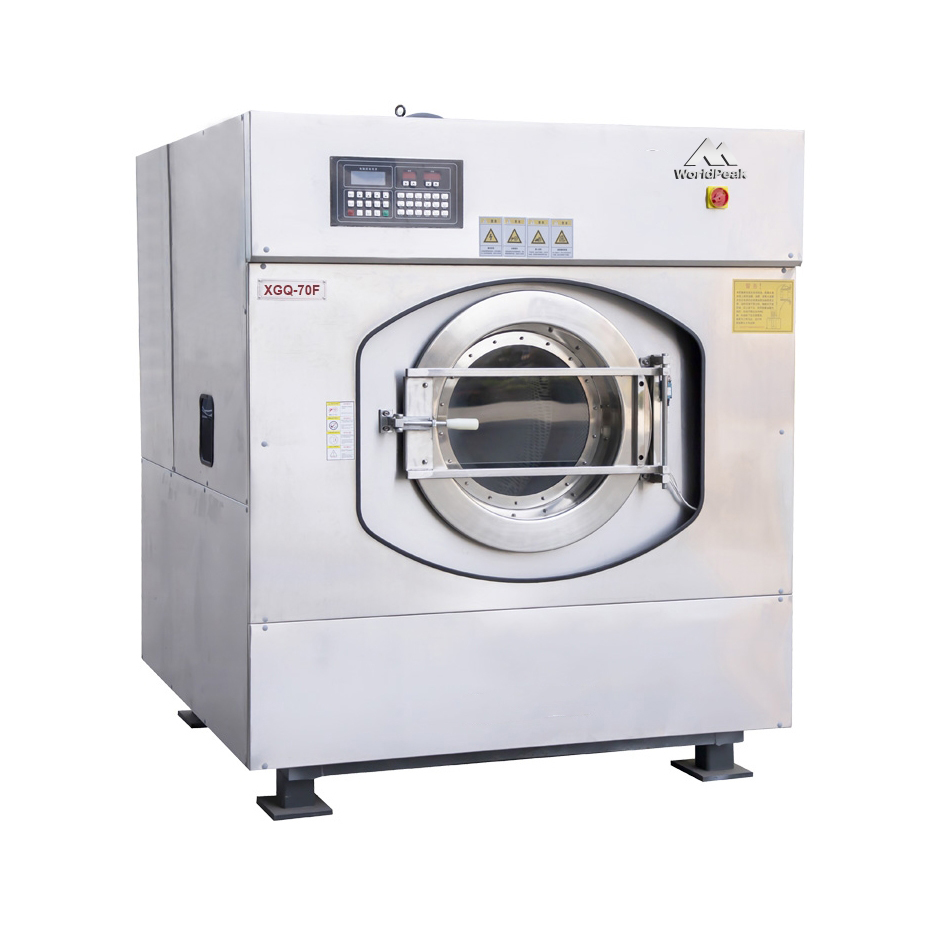

Many commercial laundry and hotel laundry operators face the same problem: linens pile up during peak season, and machines run nonstop without keeping up. The first reaction is often to buy more equipment or hire more staff, overlooking opportunities to optimize each wash cycle. The same 100 kg washer-extractor can take 15 to 30 minutes longer per load on its factory-default general-purpose program than on a program optimized for the application. Over a full day, that can mean two or three fewer loads—a substantial difference in output.
Some operators worry that faster cycles mean poorer cleaning. With the right approach, however, it is possible to eliminate wasted time without compromising cleanliness or damaging linens. Practical industry examples show that program optimization combined with workflow improvements can shorten 77% of wash cycles by 30%, allowing almost forty percent more linen to be processed in the same amount of time. The following methods focus on four areas: pretreatment, parameter adjustments, workflow management, and supporting equipment.
Prepare Linens Thoroughly Before Washing
The main wash does most of the cleaning, but what happens before linens enter the drum directly affects how long it takes. Mixing different loads or skipping pretreatment for heavy soil leaves operators relying on longer main washes to achieve acceptable results. This uses machine time to compensate for skipped manual preparation and is highly inefficient.
Sort Carefully by Soil Level to Avoid Wasting Time on Mixed Loads
Do not wash heavily oil-stained workwear, ordinary hotel sheets, and light-colored towels in the same load. Heavily soiled textiles require longer main washes and higher temperatures, slowing down the entire batch. Washing lightly soiled linens alongside them results in unnecessary overprocessing, wasting time and laundry chemicals.
Separate lightly, moderately, and heavily soiled items during sorting, and also group them by fabric type and color. Routine, lightly soiled linens can be cleaned with a short program, while heavily soiled items receive separate treatment. Each load then gets the time it needs without wasting extra minutes.
Pretreat Heavy Stains Instead of Soaking the Entire Load
For localized oil, blood, or food stains, avoid putting the whole load into the machine for a lengthy soak. Apply a suitable stain remover at the sorting station first. A few minutes of spot treatment can break down the stains before the linens go through a normal main wash.
For batches of heavily soiled linens, presoak them in a tank for 10-15 minutes with warm water and detergent to loosen surface soil before loading the washer-extractor. This can shorten the main wash by at least one-third and is much more efficient than extending the soak inside the machine.
Use the Optimal Load Weight: Avoiding Rewashes Is the Fastest Way to Save Time
For industrial washer-extractors, the optimal loading range is 70%-80% of rated capacity. Overloading restricts tumbling and creates uneven mechanical action, leaving items insufficiently cleaned and requiring another wash. Underloading can cause linens to collect on one side, increasing vibration during extraction and wasting machine capacity.
Load each batch to the appropriate weight so it can be washed and extracted properly in a single pass. Eliminating rewashes and repeat processing naturally shortens turnaround time per batch. In many laundries, long processing times stem from high rewash rates: the machines keep running, but useful output remains low.
Optimize Key Washer-Extractor Parameters
Factory-default programs use conservative, general-purpose settings intended for a wide range of applications, which also limits efficiency. Adjusting parameters for the linens you wash regularly can remove considerable unnecessary time without compromising cleaning results.
Match Water Temperature to the Detergent Instead of Automatically Choosing High Heat
Many operators assume hotter water always cleans faster, but detergents have an optimal temperature range. Standard synthetic detergents are most active at 45-55°C. Above 60°C, some ingredients can become ineffective, while the additional heating time is wasted.
Lightly soiled linens can be washed at ambient temperature or in warm water at 40°C, saving more than ten minutes of heating time. For heavy oil stains, use 60-65°C water with an emulsifier. This removes soil faster and shortens the overall cycle compared with automatically heating to 80°C.
Use a Low Water Level in the Main Wash to Increase Detergent Concentration
A low water level during the main wash increases detergent concentration and accelerates soil breakdown, reducing the need for prolonged soaking. Ensure the linens are thoroughly wetted and can tumble normally. A high water level dilutes the detergent and can require more time to achieve the same cleaning results.
Switch to a higher water level during rinsing, or use overflow rinsing, to remove residual detergent quickly without substantially extending the cycle. Industry optimization examples show that adjusting water levels alone can shorten the main wash by around 10% per batch.
Optimize Forward, Reverse, and Pause Intervals for Better Mechanical Action
Main-wash cleaning comes from the lifting, dropping, and agitation of the linens, rather than prolonged soaking. Adjust the ratio of forward rotation, reverse rotation, and pauses to suit the load. For example, a 2:2:1 pattern for sheets allows effective mechanical action and removes soil much better than slow tumbling over the same period.
Different fabrics require different speeds and rotation patterns. Heavy cotton textiles can tolerate stronger action, while delicate fabrics need gentler treatment. Improving mechanical efficiency instead of simply adding time helps shorten the main wash.
Use High-G Extraction to Reduce Drying Time as Well
Extraction does more than finish the wash cycle; it affects the efficiency of the entire washing and drying line. Higher extraction G-factors leave less moisture in the linens and reduce subsequent drying time. Industry data indicates that each 5% reduction in residual moisture content can shorten drying time by at least 15%.
Use the highest extraction speed permitted by the equipment within its operating limits. With a balanced load, high-G extraction can reduce residual moisture content to below 50%. Although this may add a few minutes to the washer-extractor cycle, the time saved across the complete washing and drying process can be substantial.
Reduce Unnecessary Rinses with Efficient Laundry Chemicals
Many laundries default to 3 rinses, although 2 can meet requirements when using an effective low-sudsing detergent. Conventional high-sudsing detergents produce more foam and require repeated rinsing. Low-sudsing concentrates dissolve quickly and produce less foam. Combined with intermediate extraction after each rinse, they rinse faster than keeping the load soaking in a full drum.
Avoid overdosing detergent, which can create the need for another rinse and waste both time and water. Where practical, install an automatic dosing system to dispense accurate quantities and reduce errors associated with manual dosing.
Streamline Workflow on the Laundry Floor
Long turnaround times often come from waiting for linens, unloading, or transfers between stages, rather than slow washing. Machines sitting idle between loads represent one of the largest and least visible sources of lost productivity.
Improve Material Flow to Keep Equipment Running
Arrange the laundry, where possible, in the sequence “soiled-linen sorting → washing and extraction → drying → ironing and folding” to minimize handling distances. Bring the next load alongside the washer shortly before the current cycle finishes, then reload immediately after unloading to maintain continuous operation.
In many laundries, workers wait until a cycle finishes before collecting and sorting the next load. The machine can then sit idle for more than ten minutes. Across seven or eight loads per day, this can cost an entire additional load. Minimizing changeover time immediately improves equipment utilization.
Save Frequently Used Programs for One-Touch Operation
Store your most frequently used programs in the PLC system in advance, such as programs for sheets, towels, and workwear, with the appropriate temperature, water level, speed, and time settings. Operators can then select the required program with one touch instead of manually adjusting parameters for every load, saving time and preventing rewashes caused by incorrect settings.
If your linen categories are fairly consistent, create more specific programs, such as lightly soiled sheets and moderately soiled sheets, with different cycle lengths. This avoids running every load on the longest program.
Schedule Continuous Operation to Reduce Cold Starts
Heating a cold machine takes time, and frequent shutdowns and restarts extend overall processing time. During peak periods, schedule continuous operation so residual heat in the machine helps the next load reach temperature faster. Align staffing with machine schedules—for example, use two shifts so staff can change over while equipment keeps running, maximizing available capacity.
You can also schedule heavily soiled loads with longer programs during off-peak hours and prioritize lightly soiled loads with shorter cycles during busy periods to maintain fast order turnaround.
Upgrade Laundry Chemicals and Supporting Equipment
Even the best program settings cannot compensate for equipment in poor condition. Many older machines slow down because maintenance and supporting utilities are inadequate, rather than simply because of age.
Switch to More Efficient Laundry Chemicals
Use an effective low-sudsing concentrated detergent together with a water-softening agent. In hard-water areas, calcium and magnesium ions react with detergent, reducing cleaning performance and creating scale. This extends main-wash time and increases the number of rinses needed. Softened water can shorten the main wash, protect heating elements, and reduce the frequency of descaling.
Improve Filling and Draining Efficiency
Slow filling and draining are hidden causes of long cycles in many older machines. Check the inlet pipe diameter and water pressure. If filling is slow, a booster pump can shorten fill times. Clean drain lines and filters daily to prevent soap residue and lint blockages. Free-flowing drainage allows the machine to move quickly to the next stage.
For steam-heated machines, maintain a stable steam pressure. An inadequate steam supply slows heating and can significantly extend the main wash. Inspect steam pipe valves regularly to prevent leaks that reduce pressure.
Maintain Equipment to Prevent Hidden Slowdowns
Scale on heating elements slows heating; slipping belts prevent the drum from reaching the required speed; and insufficient bearing lubrication increases resistance. All of these problems can gradually lengthen wash cycles without operators noticing.
Descale heating elements regularly, check belt tension, and lubricate bearings on schedule to keep equipment operating at its best. Carry out a comprehensive inspection annually and address small problems promptly before they develop into major shutdowns.
Expand Capacity at Larger Laundry Plants
Large commercial laundries processing several metric tons per day can consider upgrading to a continuous batch washer, or tunnel washer, once individual machines have been fully optimized. Unlike the intermittent, load-by-load operation of standalone washers, a tunnel washer consists of multiple separate compartments. Linens enter at one end and exit at the other, while prewashing, main washing, rinsing, and extraction take place concurrently as the system runs continuously.
Industry data indicates that modular tunnel washers can increase overall throughput by more than 30% compared with conventional combinations of standalone machines, while requiring less labor and energy for the same processing volume. Their counterflow design reuses main-wash water for prewashing and recirculates rinse water. This saves water while allowing each compartment to focus on its assigned process for more consistent cleaning results.
This approach suits large commercial laundry plants. Small and medium-sized laundries should continue to prioritize improvements to existing equipment and workflows, which require less investment and deliver results sooner.
Shortening wash cycles for high-capacity machines means eliminating wasted time throughout the process while maintaining cleaning quality: thorough pretreatment reduces the burden on the main wash; precise settings avoid the wasted time of general-purpose programs; smooth changeovers prevent idle equipment; and proper maintenance keeps machines performing at their best.
For most laundries, getting more from existing equipment before adding machines is the least expensive way to improve productivity. Shortening each cycle by 10 minutes can allow an additional 1-2 loads per day, creating room for more peak-season orders and faster linen turnaround. Over time, the benefits extend well beyond savings on water and electricity.