
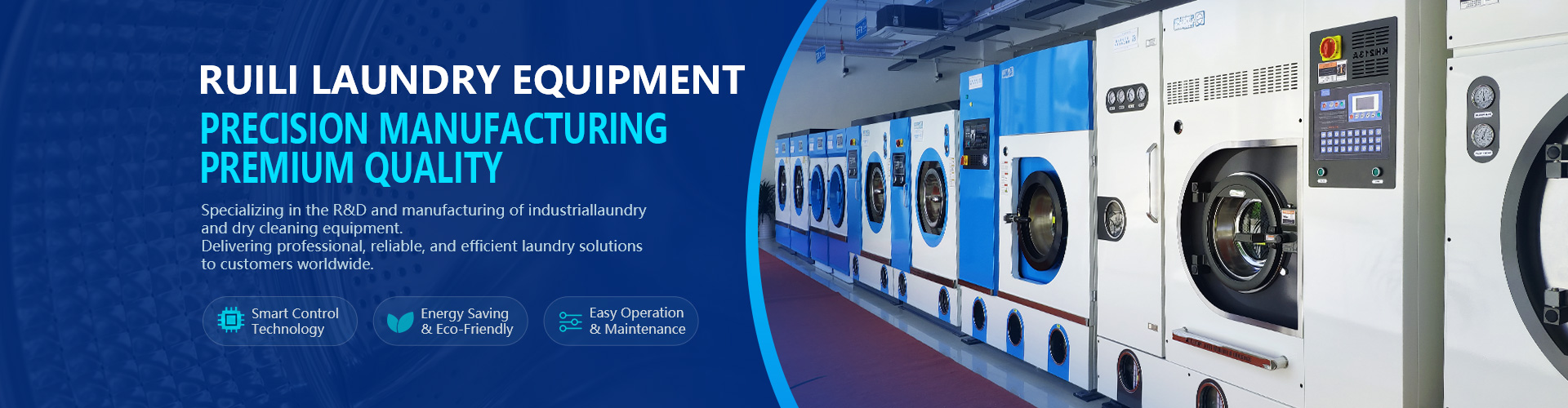

Dry cleaning is becoming increasingly familiar as a method of fabric care. There is nothing mysterious about it: it is a cleaning process that uses solvents to remove grease and stains. Because dry cleaning solvents contain virtually no water, this method is known as dry cleaning.
Based on the solvent used, dry cleaning machines currently fall into four main categories: perchloroethylene (PERC) machines, hydrocarbon (petroleum-based solvent) machines, liquid carbon dioxide machines, and limonene machines.
Based on their design, dry cleaning machines can be divided into two types: vented and fully enclosed.
The main distinction appears during the cooling stage after drying. Outside air is drawn into the drum to cool the garments, while air containing solvent vapor is discharged into the atmosphere. For this reason, all vented dry cleaning machines have an exhaust duct leading outdoors. This design causes air pollution and wastes substantial amounts of solvent, so these machines have been targeted for phaseout.
These machines use refrigeration to recover solvent at low temperatures, while a heat pump improves drying efficiency. During the cooling stage after drying, virtually all remaining solvent can be recovered without discharging exhaust air into the atmosphere. Machines equipped with high-capacity carbon adsorption systems can capture all remaining solvent vapor in the drum, preventing air pollution and significantly reducing solvent consumption.
This classification follows the overall development of dry cleaning machine technology worldwide.
These machines provide only washing and solvent extraction. Washing and extraction are performed in separate units, with manual push-button controls.
These semi-enclosed machines combine washing and solvent extraction in one unit. They also include drying, distillation, and a basic fabric bag filtration system, but still use manual push-button controls. Petroleum-solvent dry cleaning machines add a vacuum system to the distillation unit.
These semi-enclosed models build on the second generation by adding a card-based program control system and replacing fabric bag filters with spring filters. Spring filters trap particles in the gaps between adjacent spring coils. Because the number of springs is limited, the available filtration area is also limited. In addition, spring steel is susceptible to corrosion, and the filters are bulky and heavy.
Developed from third-generation machines, these models feature a fully enclosed design. Computerized controllers replace card-based program controls, while a single motor with variable-frequency control replaces dual-motor or two-speed motor drive systems. In the solvent circulation system, high-efficiency centrifugal filters replace spring filters. Some models have two filters so that light- and dark-colored garments can be processed using separate filters, improving cleaning quality. A refrigeration system cools the solvent and replaces water-cooled solvent recovery in the drying system with low-temperature refrigerated recovery. This eliminates the need for an exhaust duct, and a basic carbon adsorption unit is added. The distillation system also includes a float switch for automatic distillation control.
These machines build on fourth-generation designs. A carbon cartridge decolorization unit is added to the solvent circulation system. The exhaust system is upgraded from a basic carbon adsorption unit to a high-capacity carbon adsorption system, and the distillation system gains a residue removal mechanism. Hydrocarbon dry cleaning machines also incorporate a nitrogen inerting system that displaces oxygen to further improve safety.
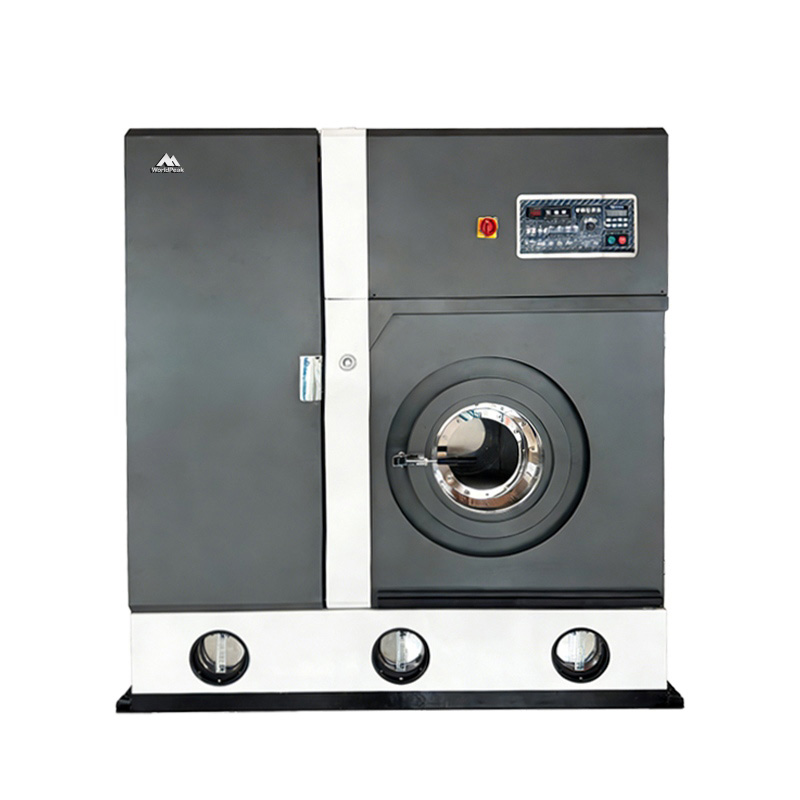
Features of QFB Fully Enclose...
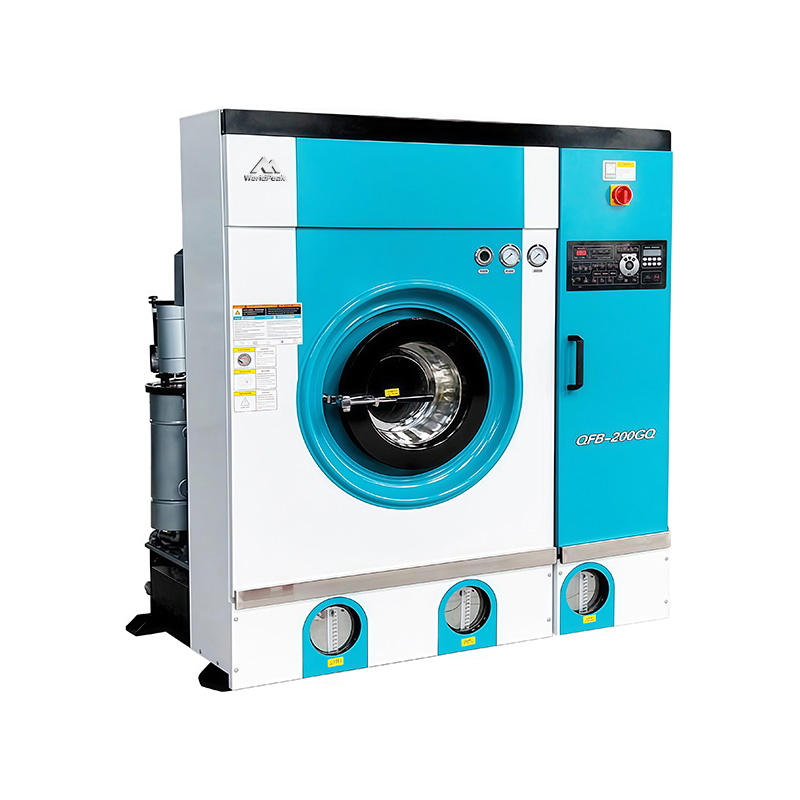
Perchloroethylene (PERC) is a...
When setting up a commerc...
When setting up a laundry...
When operating a hotel wi...
Many owners of newly open...
Many entrepreneurs enteri...
Many commercial laundry a...
Whether you are opening a...
In commercial settings su...