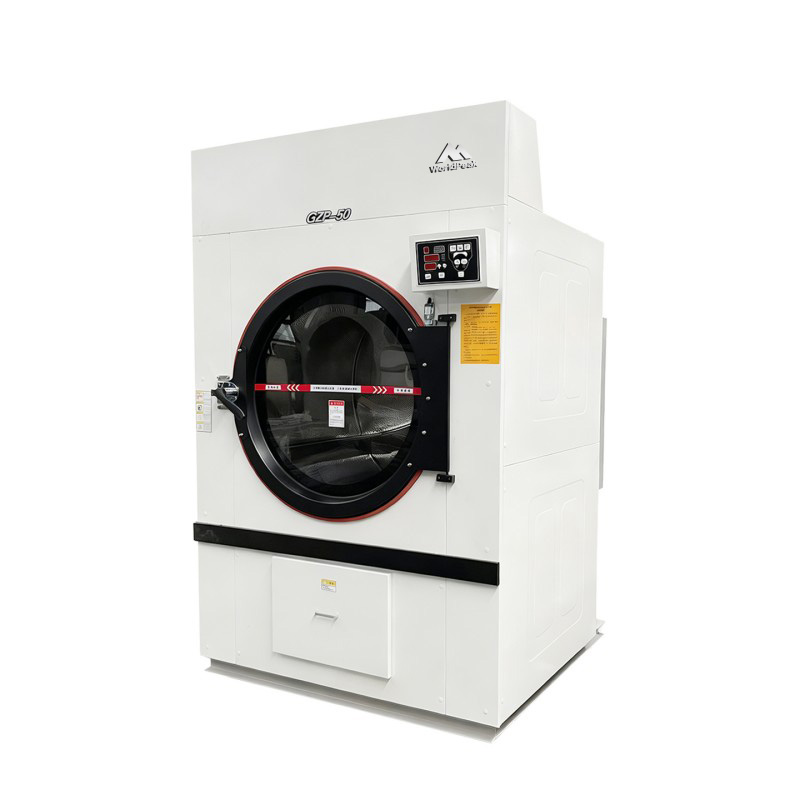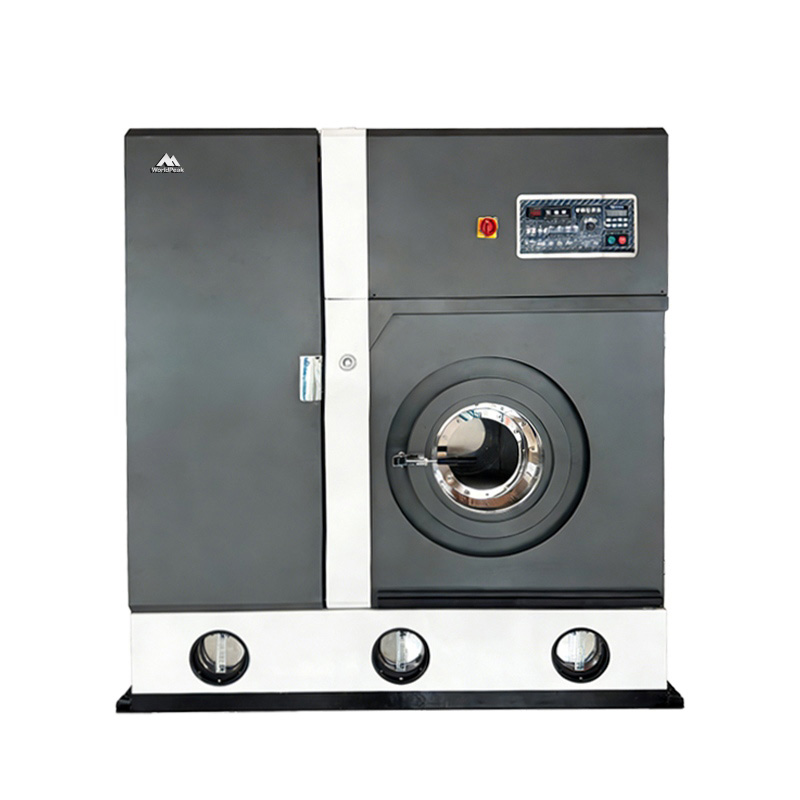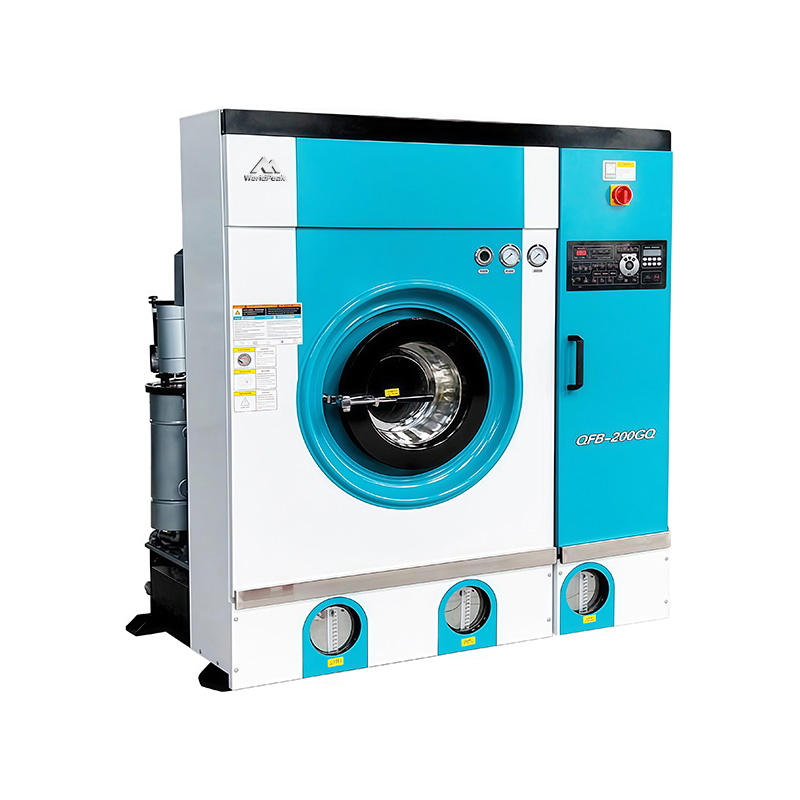

Whether you are opening a laundry, managing hotel linens, or washing factory workwear, choosing an industrial washing machine can be challenging. Many operators focus only on the quoted price or automatically opt for a larger machine. Once it is installed, they find that capacity does not match demand, utility bills remain high, breakdowns are frequent, and linens wear out faster than expected. As a major investment at the heart of your laundry, the right industrial washer directly affects daily productivity, linen life, and long-term expenses. This buying guide walks you through estimating demand, selecting machine types, comparing key specifications, calculating costs, and avoiding common purchasing mistakes so you can choose equipment that fits your business.
Estimate Your Laundry Requirements
Capacity is the foundation of equipment selection. An oversized machine wastes water and electricity, while an undersized machine may struggle to keep up during peak periods. Matching capacity to your actual average daily laundry weight helps balance productivity and cost.
How to Estimate Daily Linen Volume
Use linen-weight estimates for different settings as a starting point. Before purchasing, measure the weight of dry linens you normally wash each day and allow for seasonal fluctuations.
Hotels: A standard twin room contains about 13 kg of linens, while a room with a double bed contains about 9 kg. Calculate daily laundry volume based on occupancy and linen-change frequency. For example, a small hotel with 40 guest rooms may generate approximately 400–500 kg of laundry per day.
Commercial laundries and factory workwear operations: Calculate the total weight of daily orders or employees’ workwear. Allow an additional 10%–20% in capacity to accommodate sharp increases in peak-season demand.
Once you know the total daily weight, calculate the required capacity per machine. Industrial washers typically complete 3–5 full wash cycles per day. Dividing total daily laundry weight by the number of daily batches gives you the machine capacity required.
Rated Capacity Is Not the Maximum Loading Weight
Many owners assume the rated capacity on the nameplate is the maximum weight that can be packed into the machine. In practice, the optimal load is 70%–80% of rated capacity. For a 100 kg model, washing 70–80 kg of dry linens per batch delivers the best results. Overloading restricts mechanical action and cleaning performance, overloads the motor, accelerates bearing wear, and increases the risk of damage to sheets and towels. Underloading can cause linens to collect on one side during extraction, leading to severe vibration and wasted water and electricity.
Quick Capacity Selection Guide
| Rated Capacity | Suggested Applications |
|---|---|
| 15–25 kg | Guesthouses with up to 15 rooms, small dry-cleaning shops, and small company employee dormitories |
| 30–50 kg | Hotels with 30–50 guest rooms and small in-house factory laundries |
| 70–100 kg | Hotels with 80–120 guest rooms and medium-sized commercial laundry plants |
| 100 kg and Above | Large hotels with more than 200 guest rooms, large central laundries, and workwear laundry plants |
Also check the drum-volume-to-load ratio. Some manufacturers reduce drum size to lower prices while overstating capacity. The specifications may look attractive, but loading the advertised weight can actually overload the machine. A properly designed washer needs an appropriate relationship between drum diameter and load capacity; otherwise, prolonged overloading can cause frequent breakdowns.
Choose a Machine Type That Fits Your Application
Industrial washers come in several types. No single type is best for every operation; what matters is whether it suits your laundry requirements.
Fully Automatic Washer-Extractors
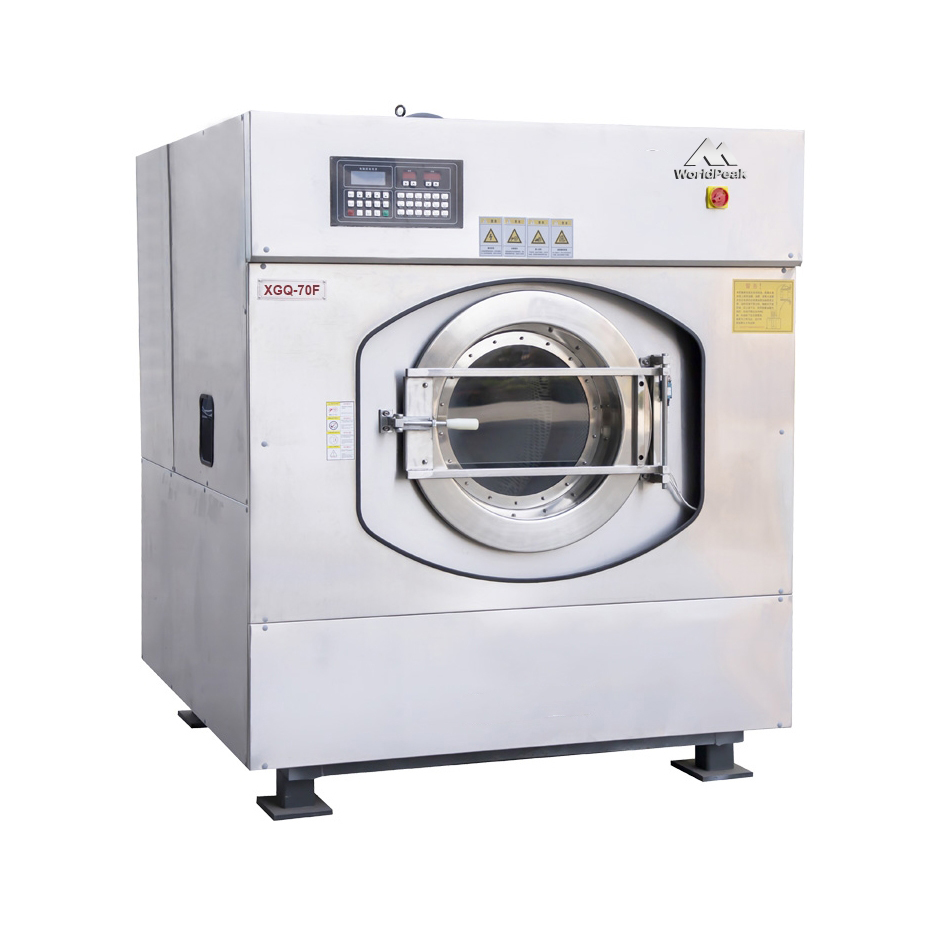
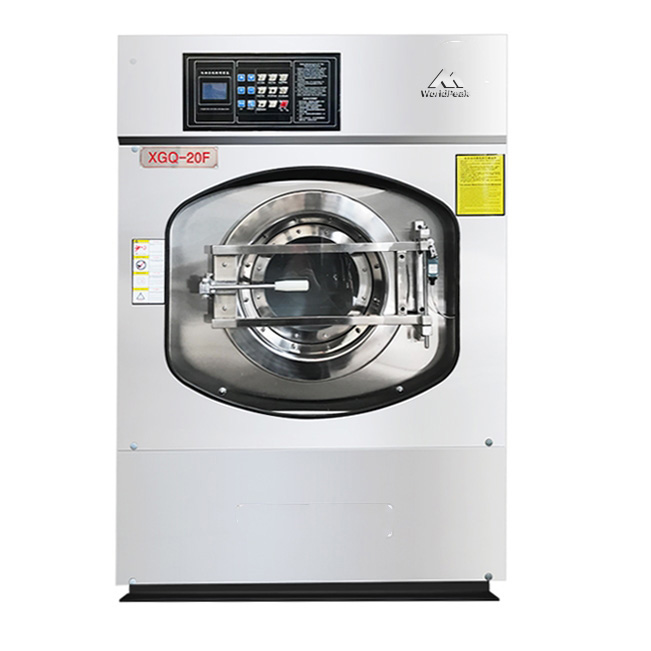
These are the most commonly purchased machines. Washing, rinsing, and extraction take place in a single unit, with a programmable logic controller (PLC) automatically managing the entire cycle. There is no need to transfer linens manually between stages. They suit most hotels, schools, factories, and small to medium-sized commercial laundries. A wide range of models is available, with capacities from 15 kg to 300 kg. Buying tip: Prioritize models with a full suspension system. They do not require embedded anchor bolts, can be installed on the second floor or higher, and produce substantially less vibration and noise.
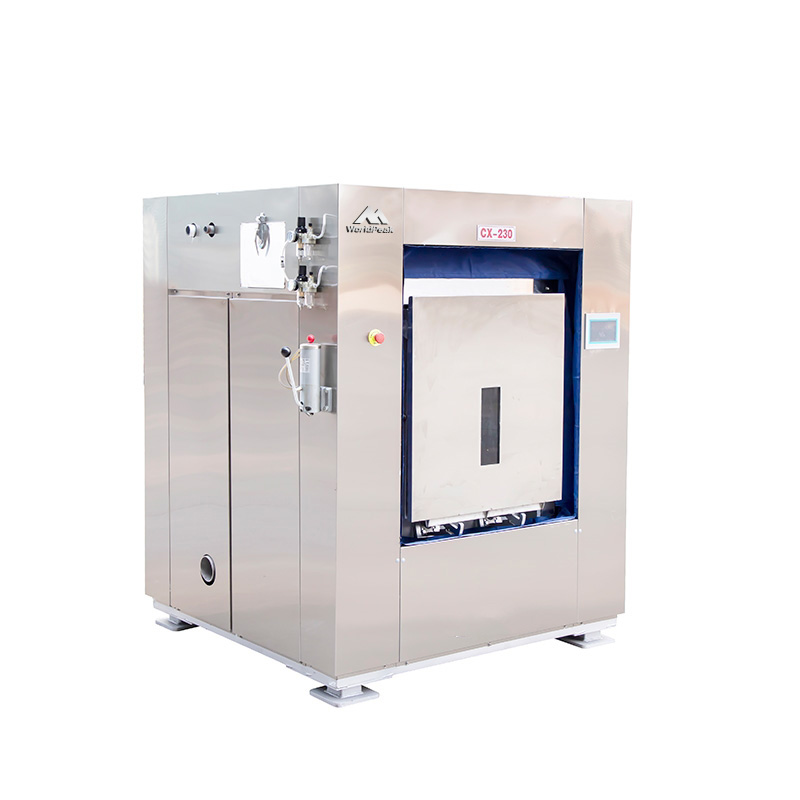
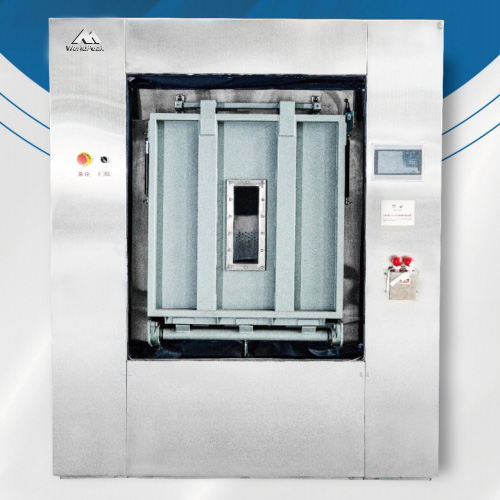
Hygienic Barrier Washer-Extractors
Also called dual-door washer-extractors, these machines have doors at the front and rear and are installed through a partition wall. Soiled linens are loaded from the dirty side and unloaded from the clean side after washing, keeping the two streams separate. They are commonly used in hospitals, pharmaceutical plants, food processing facilities, and cleanrooms with strict hygiene controls to prevent cross-contamination of linens. Plan the laundry layout before purchasing, reserve space for the partition-wall installation, and establish separate routes for soiled and clean linens.
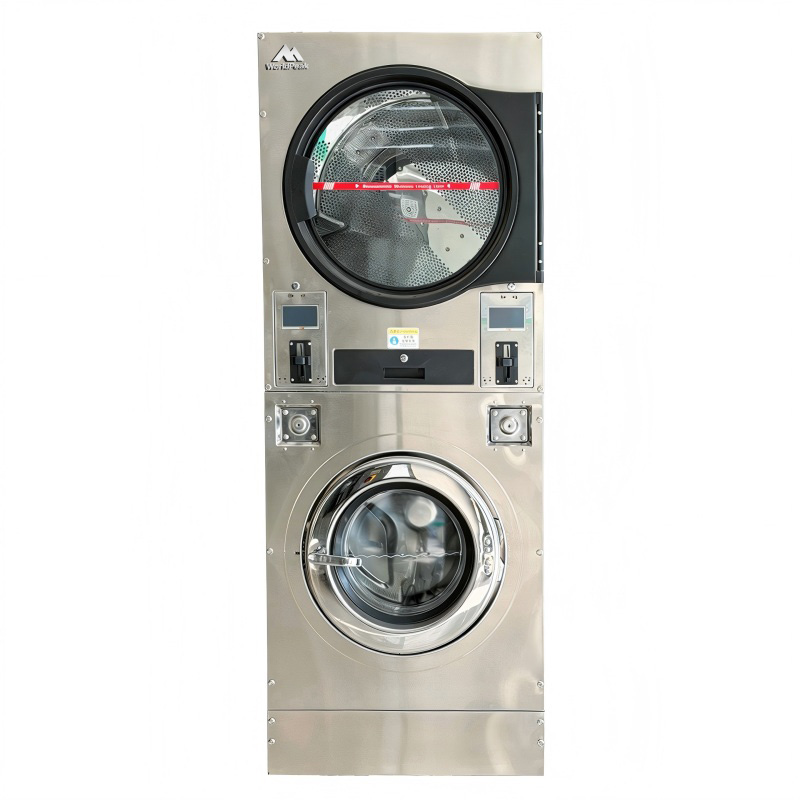
All-in-One Washer-Dryers
These machines add drying to the washer-extractor’s functions, completing washing, extraction, and drying in a single unit. They suit small hotels, neighborhood laundries, employee dormitories, and other locations with limited space and modest daily laundry volumes. Their main advantage is saving space by eliminating the need for a separate dryer. The limitations are clear: drying efficiency is lower than that of a standalone dryer, and capacity per batch is limited. They are not recommended for high-volume production.
Semi-Automatic Horizontal Washers
These traditional horizontal industrial washers handle washing only. Operators must transfer linens manually to a separate extractor for water removal. They suit textile printing and dyeing plants, basic workwear cleaning, and small operations with tight budgets. Their construction is simple, purchase prices are low, spare parts are readily available, and they can accommodate certain specialized washing processes. However, they require more labor and offer limited automation, making them a poor choice for commercial laundries seeking high throughput.
Key Specifications
Many buyers compare only capacity and price, overlooking specifications that can reveal stripped-down equipment. The following factors directly affect operating stability, service life, and long-term operating costs.
Drum and Tub Materials
Corrosion resistance is essential because the machine is exposed to water for prolonged periods and comes into contact with detergents and bleach. Choose an inner drum made of 304 stainless steel, with a recommended sheet thickness of at least 1.5 mm. The drum walls should be smooth and free of burrs to help prevent rust and avoid snagging towels and sheets. Low-cost models often substitute 201 stainless steel, which can develop rust spots after a year or two and may even contaminate linens. If the budget permits, prioritize stainless steel for both the outer tub and cabinet. Powder-coated cabinets cost less but are more prone to peeling and rust in prolonged damp conditions. Look beyond sales claims. Confirm whether the components that directly contact water and linens are made of 304 stainless steel, and verify the actual sheet thickness rather than relying on an “all-stainless-steel” description.
Extraction G-Factor
Buyers often focus on spin speed, but the extraction G-factor, which indicates centrifugal force, is the real measure of extraction performance. An industrial washer-extractor should provide at least 300G, with higher-end models reaching 350G or more. Each increase of 50 in the G-factor can reduce linen moisture content by 5%–8% and shorten subsequent drying time by approximately 20%, lowering electricity and steam consumption. For a 100 kg machine running 10 hours per day, a 300G model can deliver substantial annual energy savings compared with a 200G model. Do not compare spin speed alone. At the same rotational speed, a larger drum diameter produces a higher G-factor and better extraction.
Motor and Drive System
Motor quality determines how reliably the machine operates during prolonged continuous use. Prioritize a motor with variable-frequency speed control. This allows speed to adjust automatically to load weight, saving 15%–30% in electricity compared with a fixed-frequency motor while providing smoother, quieter operation. Although the purchase price may be a few thousand yuan higher, a laundry operating continuously for 8 hours per day can recover the difference through electricity savings in about a year. Drive systems are either belt-driven or direct-drive. Belt-drive technology is mature, repairs are straightforward, and spare parts are widely available. Direct-drive systems offer higher energy efficiency and lower noise but tend to cost more to repair. For most commercial applications, a belt-driven model with variable-frequency control is a dependable choice.
Suspension and Vibration Control
High-speed extraction generates substantial vibration, and the vibration-control design directly affects installation requirements and machine life. Full suspension: Springs and dampers work together to absorb vibration effectively. These machines do not require floor anchors, can be positioned on a level floor, and can also be installed on upper floors. Hard-mount design: These machines cost less but generate more vibration, require a purpose-built foundation and anchoring, and are suitable only for ground-floor installation. For upper-floor locations or operations sensitive to noise and vibration, such as hotel laundries, prioritize a fully suspended model.
Heating Method
The main options are steam heating and electric heating. The right choice depends on the utilities available at your site. Steam heating: It heats quickly and costs less to operate, making it suitable for laundries with an existing steam supply or boiler. Long-term operating costs are at least 30% lower than electric heating. Electric heating: Installation is straightforward and requires no steam infrastructure, making it suitable for small premises. Its drawbacks are higher electricity costs and slower heating. Before ordering, confirm whether a steam connection is available and whether the 380V three-phase power supply has sufficient capacity. Otherwise, additional utility modifications may be needed after delivery.
Control System
Choose a PLC-based programmable control system whenever possible. It can store multiple wash programs, allowing separate settings for water temperature, wash duration, and extraction speed for towels, sheets, workwear, and healthcare textiles. Touchscreen controls are more intuitive than traditional buttons, helping staff learn faster and reducing linen damage caused by operating errors.
Operating Costs
Many buyers compare equipment prices without considering the operating expenses that follow over the years. An industrial washer typically lasts 8–10 years under normal use. During that period, total spending on water, electricity, steam, labor, and maintenance often amounts to 3 to 5 times the purchase price.
Energy is the largest day-to-day expense. Ask the manufacturer for measured consumption data: water, electricity, and steam used per 100 kg of dry linens. Models with energy-saving modes and support for reclaimed-water reuse cost slightly more upfront but can deliver substantial long-term savings.
Linen wear is a hidden cost. Poorly made drums with burrs and uneven mechanical action can cause linens to turn gray, pill, and tear, shortening their service life. Hotels and commercial laundries replace linens year-round, and the accumulated expense can far exceed the initial savings on equipment.
Future maintenance costs also matter. Check the prices and replacement intervals for wear components such as bearings, water seals, and belts. Prioritize widely installed models with readily available parts. Proprietary parts for less common brands are expensive and have long lead times, and a breakdown can bring the laundry to a halt.
After-Sales Support
Industrial washers are heavy-duty machines, making after-sales support especially important. A breakdown can delay orders and lead to significant losses.
Prioritize manufacturers with their own factory, at least 5 years of industry experience, and proper product test reports. Avoid intermediaries that only rebrand equipment, as quality and after-sales support may be less dependable.
Review the warranty terms carefully. Common industry terms include a 1-year warranty on the complete machine and a 2–3-year warranty on the main shaft bearings. Clarify the scope of coverage, which wear parts are excluded, and whether on-site service carries additional charges to avoid disputes later.
A good supplier also provides site surveys, installation and commissioning, operator training, and guidance on scheduled maintenance. If you are setting up a laundry for the first time, a complete support package can help you avoid unnecessary problems.
Common Mistakes to Avoid When Buying an Industrial Washer
1. Choosing Excessive Capacity Without Assessing Demand
Bigger is not always better; capacity should match your daily laundry volume. An oversized machine runs with partial loads and continually wastes water and electricity. An undersized machine creates peak-season backlogs and forces staff to work overtime. An additional 10%–20% in capacity is enough to accommodate seasonal demand, without automatically choosing the largest model.
2. Focusing Only on Price and Ignoring Component Specifications
Low-cost machines may cut corners in several areas: substituting 201 stainless steel for 304, using unbranded fixed-frequency motors, simplifying suspension systems, and reducing drum sheet thickness. These machines can develop rust, excessive vibration, and frequent faults after only a year or two. Subsequent repair costs can far exceed the initial purchase savings.
3. Overlooking Site Conditions
Always arrange a site survey before placing an order. Measure doorways and elevators to confirm the machine can be brought inside. Check the capacity of the 380V power supply and the sizes of water supply and drain connections. For upper-floor installations, verify the floor’s load-bearing capacity. If steam is required, confirm the pipe connections. Many operators discover only after delivery that the equipment will not fit or that utilities are incompatible, leading to substantial additional modification costs.
4. Confusing Light Commercial Machines with Industrial Equipment
Some light commercial machines are marketed as “industrial washers” even though they are designed for only short periods of daily use and cannot withstand 8 hours of continuous, demanding operation. Confirm the equipment’s continuous-duty rating before purchasing so you do not end up with an oversized household washer.
5. Mismatching Capacity Across the Production Line
The capacities of washer-extractors, dryers, and flatwork ironers should be matched. For example, a 100 kg washer-extractor is best paired with a dryer rated at 100 kg or more. Otherwise, washing outpaces drying, creating a bottleneck that wastes the capacity of the entire line.
The best industrial washer is not necessarily the most expensive or the largest. What matters is matching your laundry volume, application, and site conditions. Estimate demand and determine capacity first, then choose the appropriate machine type. Check key specifications such as drum materials, extraction G-factor, motor, and suspension, while evaluating the brand’s after-sales support and long-term operating costs.
If you are setting up a laundry for the first time, ask the supplier to survey the site and develop a complete equipment plan around your order volume. This provides better support for reliable operation across the entire laundry line than choosing individual machines separately.