

When setting up a commercial laundry, many operators struggle to choose between an all-in-one washer-dryer and separate machines. Owners of small hotels, guesthouses, and factories are often drawn to the idea of washing, extracting, and drying in a single machine. It takes up less space, is easy to operate, and may seem more affordable. Once the laundry is up and running, the differences in throughput, drying quality, and long-term operating costs become clear. Choosing the wrong setup can limit productivity and increase linen replacement costs.
Both industrial washer-dryer combos and separate washer-and-dryer setups have their place. The right choice depends on your available space, daily laundry volume, and operating needs. The sections below compare equipment design, throughput, costs, and typical applications to help you choose.
How the Two Setups Differ
It's easy to picture a washer-dryer combo as a washing machine with a dryer built in. In practice, the two setups are designed around different workflows.
Industrial Washer-Dryer Combo
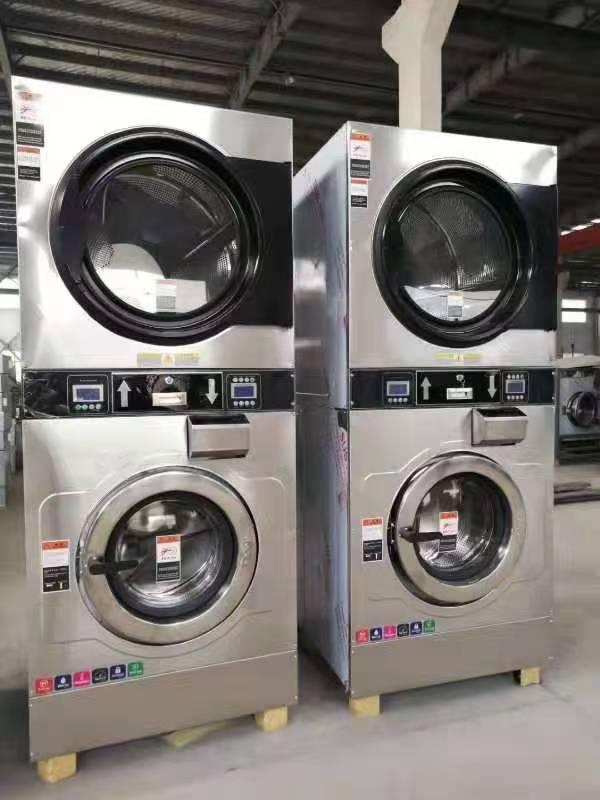
An industrial washer-dryer combo handles washing, rinsing, spin extraction, and drying in the same drum. Once you load the linens and start the program, the machine runs the full cycle without a manual transfer. You unload dry linens at the end.
Most models have capacities of 15 to 50 kg. Larger models are uncommon, and the technology is less established than that of separate machines. A 30 kg industrial washer-dryer combo from a mainstream brand typically costs around $5,000 – $9,000, with entry-level Chinese-made models at the lower end and imported brands at the higher end.
The main advantages are a smaller footprint and fewer operating steps, making a combo suitable for sites with very limited space and low laundry volumes.
Separate Washer-Extractor and Dryer
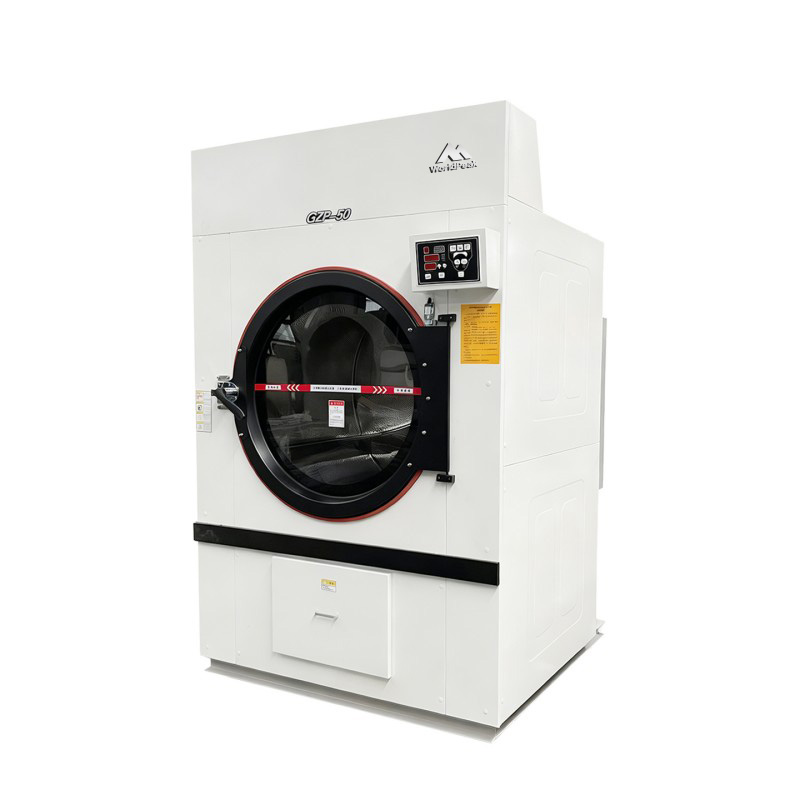
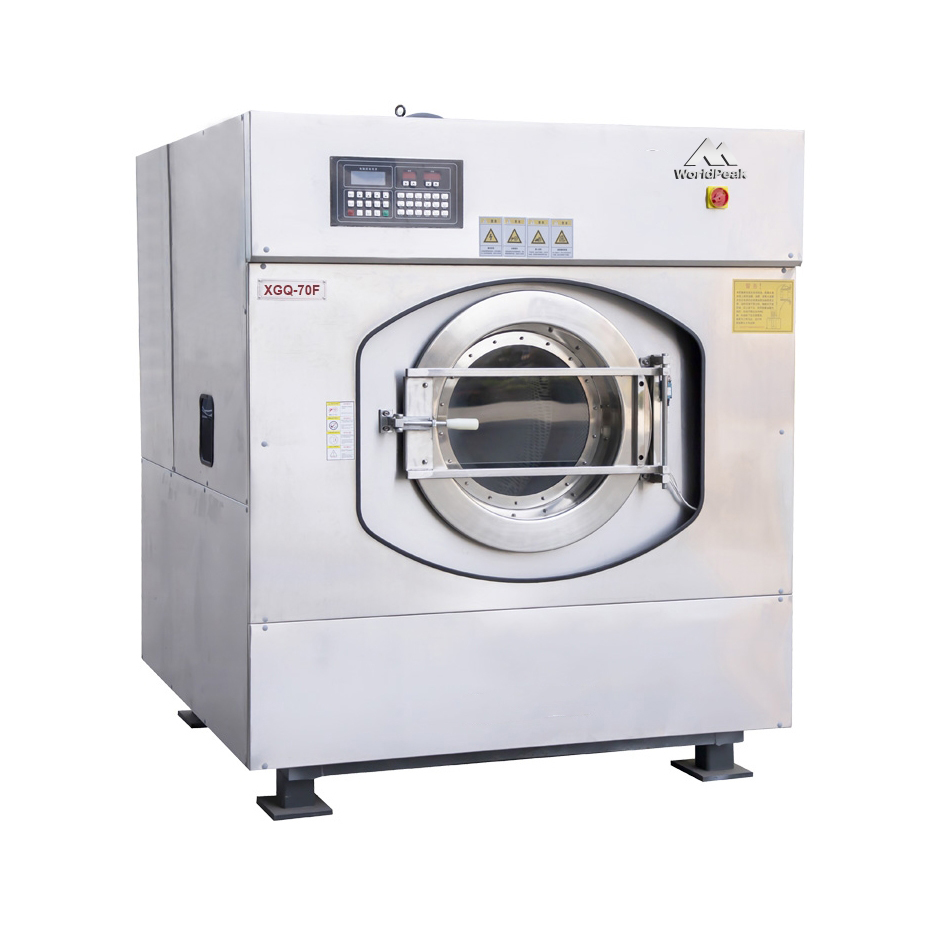
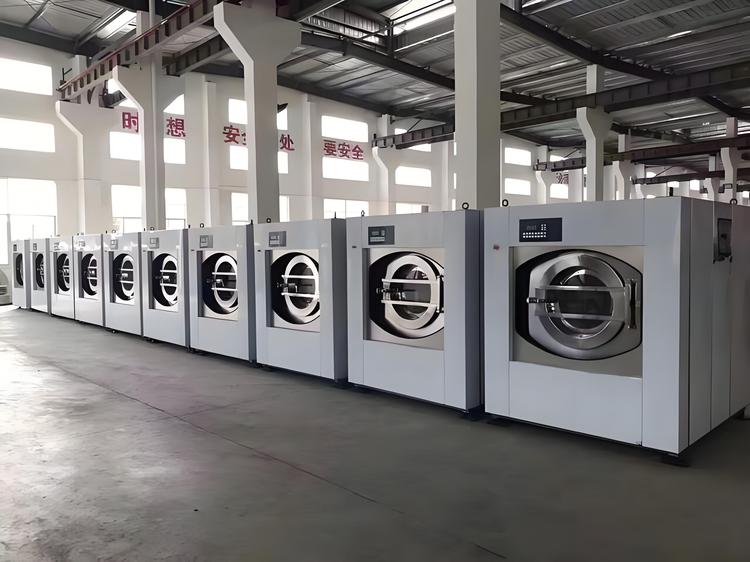
This setup pairs a fully automatic washer-extractor with a dedicated dryer. After the wash cycle, an operator transfers the linens to the dryer. It is the most common setup in commercial laundries.
Available capacities range from 15 kg to several hundred kilograms, with options for different budgets and workloads. In a 30 kg setup, the washer-extractor typically costs $3,500 – $6,000 and the dryer $3,000 – $5,000, for a total of $6,500 – $11,000. The upfront price is slightly higher than that of a combo with the same capacity, and the separate setup offers substantially higher throughput and a more flexible workflow.
Industrial Washer-Dryer Combo vs. Separate Washer and Dryer
Throughput Is Nearly Twice as High with Separate Machines
Throughput is the biggest difference between the two setups, and it's easy to underestimate.
An all-in-one machine runs each stage in sequence. The drum is occupied from the initial fill through the end of drying, so the next wash load has to wait. A standard 30 kg load of cotton textiles typically takes 1.5 to 2 hours from start to finish.
Separate machines can run in parallel. Once the first load moves into the dryer, the washer-extractor can start the second load immediately. With washing and drying underway at the same time, the laundry can finish about one load per hour, giving it roughly twice the daily throughput of a combo with the same capacity.
The difference adds up in laundries that operate continuously throughout the day. Over an eight-hour shift, a combo can finish about 4 to 5 loads, while separate machines can handle 7 to 8. This matters most during peak season.
Dedicated Dryers Dry More Evenly and Reduce Linen Wear
Drying evenness and fabric wear can have a significant impact on long-term linen costs.
A dedicated dryer uses purpose-built ductwork and a high-airflow fan to move hot air through the load from multiple directions. The drum alternates directions to loosen and redistribute the fabrics, so towels come out fluffy and sheets dry evenly without damp spots. More precise temperature control also helps prevent heat damage to fibers.
In a combo, the ductwork and fan must fit into a machine that also washes. Airflow and air pressure are generally lower than in a dedicated dryer, so the center of a load often stays damp and may need additional drying. The same drum also has to withstand both high-speed extraction and high drying temperatures. This can increase fabric wear, leaving towels and sheets more prone to fuzzing or becoming brittle.
In practice, linens processed in a combo typically need to be replaced 20% to 30% sooner than those processed with separate machines. This can add considerably to annual operating costs.
A Combo Takes Up Less Floor Space
A combo needs just one equipment bay. For a small guesthouse or apartment building using a converted storage room of only a few square meters, it may be the only setup that fits.
A separate setup needs room for two machines and enough clearance to transfer linens between them. It takes up roughly 1.8 to 2 times as much floor space as a combo. This difference matters most at sites where space is tight.
Purchase Prices Are Close at Smaller Capacities, and Separate Machines Offer Better Value at Larger Capacities
At smaller capacities, an all-in-one machine can cost slightly less upfront. A 20 kg combo, for example, is typically 10% to 15% cheaper than a separate 20 kg setup. Above 50 kg, combo models are scarce, may cost more than separate machines, and use less established technology.
Separate equipment gives you more room to expand. You can start with one washer-extractor, add a dryer later, or install a second washer-extractor when wash volume grows. Increasing capacity with a combo requires replacing the entire machine, which raises the upgrade cost.
Separate Machines Typically Use Less Energy per Kilogram
Energy use per kilogram of linen is generally lower with a separate washer-extractor and dryer, even though two machines are involved.
A dedicated dryer circulates hot air efficiently and uses moisture sensing to stop when the load is dry. The design constraints of a combo can lead to greater heat loss and longer drying cycles, increasing energy use per kilogram. The difference becomes more apparent when processing large volumes continuously.
Separate Machines Make Maintenance Easier and Reduce Downtime
A combo relies on a single machine for washing, extraction, and drying. If a critical component fails, all three functions are unavailable and the laundry comes to a halt.
With separate machines, the dryer can still finish linens that have already been washed if the washer-extractor breaks down. If the dryer fails, the washer-extractor can keep running and the linens can be hung up to dry temporarily. Separate machines are widely used, replacement parts are readily available, and technicians are familiar with them. This helps lower maintenance costs and shorten repair times.
Separate Machines Generally Last Longer
The service life of industrial laundry equipment depends largely on the demands placed on its key components.
In a combo, the motor, main shaft, and bearings must withstand the high centrifugal forces of spin extraction and repeated exposure to high drying temperatures. These conditions accelerate wear. With routine maintenance, a combo typically lasts 8 to 10 years.
With separate machines, the washer-extractor is built for water exposure and mechanical loads, and the dryer is built for hot-air operation. Components face a narrower range of operating conditions and generally have larger design margins. With normal use and regular servicing, 12 to 15 years is common, and well-maintained units can last longer.
How Do You Choose Between the Two Setups?
Base the decision on three practical considerations: your available space, daily laundry volume, and operating priorities.
When an Industrial Washer-Dryer Combo Makes Sense
Your laundry room has space for only one machine.
You run a small operation, such as a guesthouse with 10 to 20 rooms or a small staff dormitory, and wash only 3 to 5 loads a day.
You value simple operation, want to eliminate manual transfers between machines, and have modest throughput needs.
A combo is a practical choice for small operations with limited space and occasional use.
When to Choose a Separate Washer-Extractor and Dryer
You operate a hotel with more than 30 rooms or a factory laundry with a steady daily workload.
You plan to operate long term and value equipment reliability and longer linen life.
You need the equipment to run continuously to keep up with peak-season volumes.
You have specific drying standards, such as keeping towels fluffy and bedding smooth at a midrange or upscale hotel.
If your daily laundry volume is steady and the equipment runs for more than four hours a day, separate machines are almost always the more economical choice. The slightly higher upfront cost brings higher throughput, less linen wear, and a longer equipment life, improving long-term value.
Common Misconceptions
Myth 1: A Combo Always Saves Money
The purchase price can make a combo look cheaper. Over time, lower throughput, higher energy use per kilogram, and more frequent linen replacement can raise the total cost. The cost advantage generally applies only when laundry volume is very low.
Myth 2: A Combo Saves a Lot of Labor
Moving a load between machines usually takes only a minute or two. At a few loads a day, eliminating that step saves only a few minutes. Sorting and folding take up most of the labor. A slower combo cycle can also leave staff waiting for loads to finish.
Myth 3: Start with a Combo and Add Equipment Later
If your laundry volume is likely to grow, a combo is usually a poor fit as a temporary solution. Once you outgrow it, you may have to sell it at a loss and buy separate machines anyway. Starting with a basic separate setup gives you more flexibility to add equipment as demand grows.
Frequently Asked Questions Q&A
1. Is a Combo a Practical Choice for a 15-Room Guesthouse on a Tight Budget?
Yes. A combo can comfortably handle two or three loads a day, save space, and run without a dedicated attendant. It should be sufficient as long as the guesthouse rarely needs to run it back-to-back every day during peak-season full occupancy.
2. Can an Industrial Washer-Dryer Combo Run Continuously for Eight Hours a Day?
It can, though sustained use at that level is inadvisable. These machines are designed for lighter duty than continuous full-capacity production. Extended heavy use increases the likelihood of breakdowns and shortens service life. Three to five loads a day is a more manageable workload.
3. On the Same Budget, Should I Buy a Higher-End Combo or an Entry-Level Separate Setup?
Choose the separate setup. Even entry-level separate machines generally offer higher throughput, better drying results, and easier maintenance than a similarly priced combo. A premium combo still has the throughput constraint of using the same drum for washing and drying.
Industrial washer-dryer combos and separate washer-and-dryer setups serve different laundry needs.
For low-volume, occasional laundry in a tight space, a combo is convenient, compact, and good value. As laundry volume grows, the advantages of separate machines in throughput, drying quality, service life, and maintenance become more pronounced. Hotels and commercial laundries planning to operate long term can usually justify the slightly higher upfront cost of separate machines through more reliable operation and lower overall costs.
When choosing equipment, consider your current budget and floor space alongside how much your laundry volume could grow over the next two or three years. Choosing a setup that can handle that growth from the start costs less than replacing it partway through.