
Many entrepreneurs entering the hotel linen laundry business see processing 1,000 sets per day as a starting target for a midsize commercial laundry. Online estimates of the economics vary widely: some claim you can recover your investment within six months, while others say you end up working just to pay the landlord and employees. The difference largely comes down to whether all hidden costs have been included and what the local market will actually pay.
Linen laundering is not a high-margin business. It is a hands-on operation that depends on volume and disciplined management to generate profit. Drawing on operating data from the industry, this article examines five areas: startup investment, daily operating costs, revenue projections, profit potential, and business risks. The goal is to provide a practical reference for anyone considering entering the market.
What Does Processing 1,000 Hotel Linen Sets per Day Involve?
Many people have an unclear understanding of what constitutes a linen set, assuming it simply means a four-piece bedding set. In the industry, a standard guestroom linen set typically includes one sheet, one duvet cover, two pillowcases, one bath towel, two hand towels, and one bath mat—a complete linen change for a guestroom.
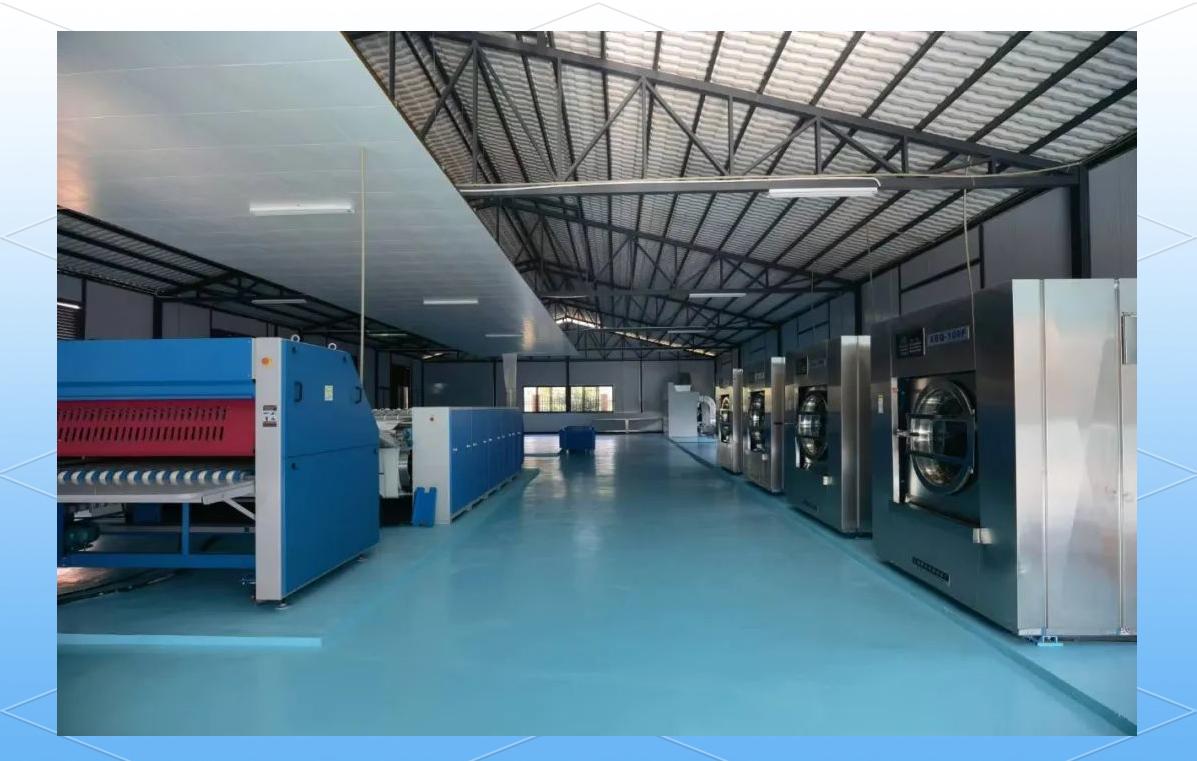
A typical budget hotel linen set weighs approximately 5–6 kg when dry, so processing 1,000 sets means handling 5–6 metric tons of dry linen per day. This is already beyond the scale of a small workshop. It requires a complete washing, drying, ironing, and folding line, along with pickup and delivery vehicles and space for sorting and storage. A facility of this size can generally serve 3–5 hotels with 100–150 rooms each, or one midsize hotel with more than 300 rooms.
For midscale and upscale hotels, linens often use finer yarns and include additional items, such as bathrobes and washcloths. The weight per set can rise to 7–8 kg, increasing the equipment capacity required to process the same number of sets.
How Much Does It Cost to Open a Commercial Laundry?
Opening a commercial laundry involves more than buying a few machines. Equipment, facility improvements, licenses and permits, and working capital are all essential. Many first-time operators overlook the latter expenses and run out of cash before the business is fully established.
Core Equipment Investment
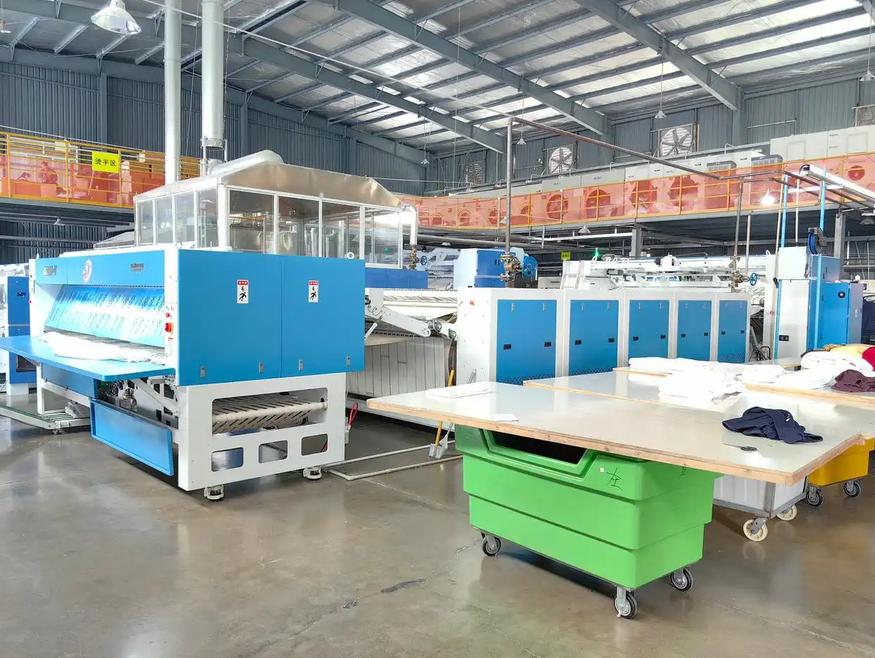
A standard setup for processing 1,000 sets per day centers on three equipment categories—washer-extractors, dryers, and flatwork ironers—plus a boiler and supporting equipment:
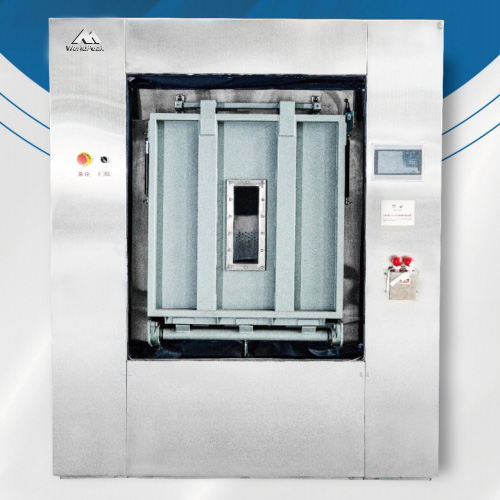
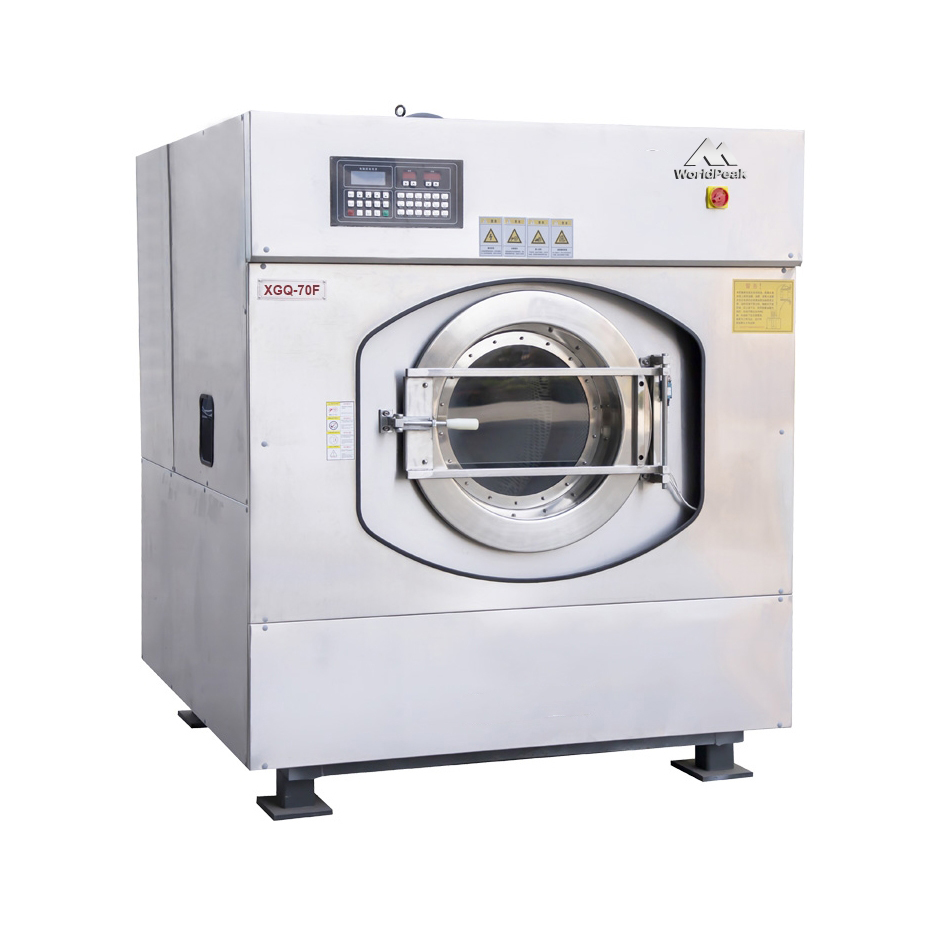
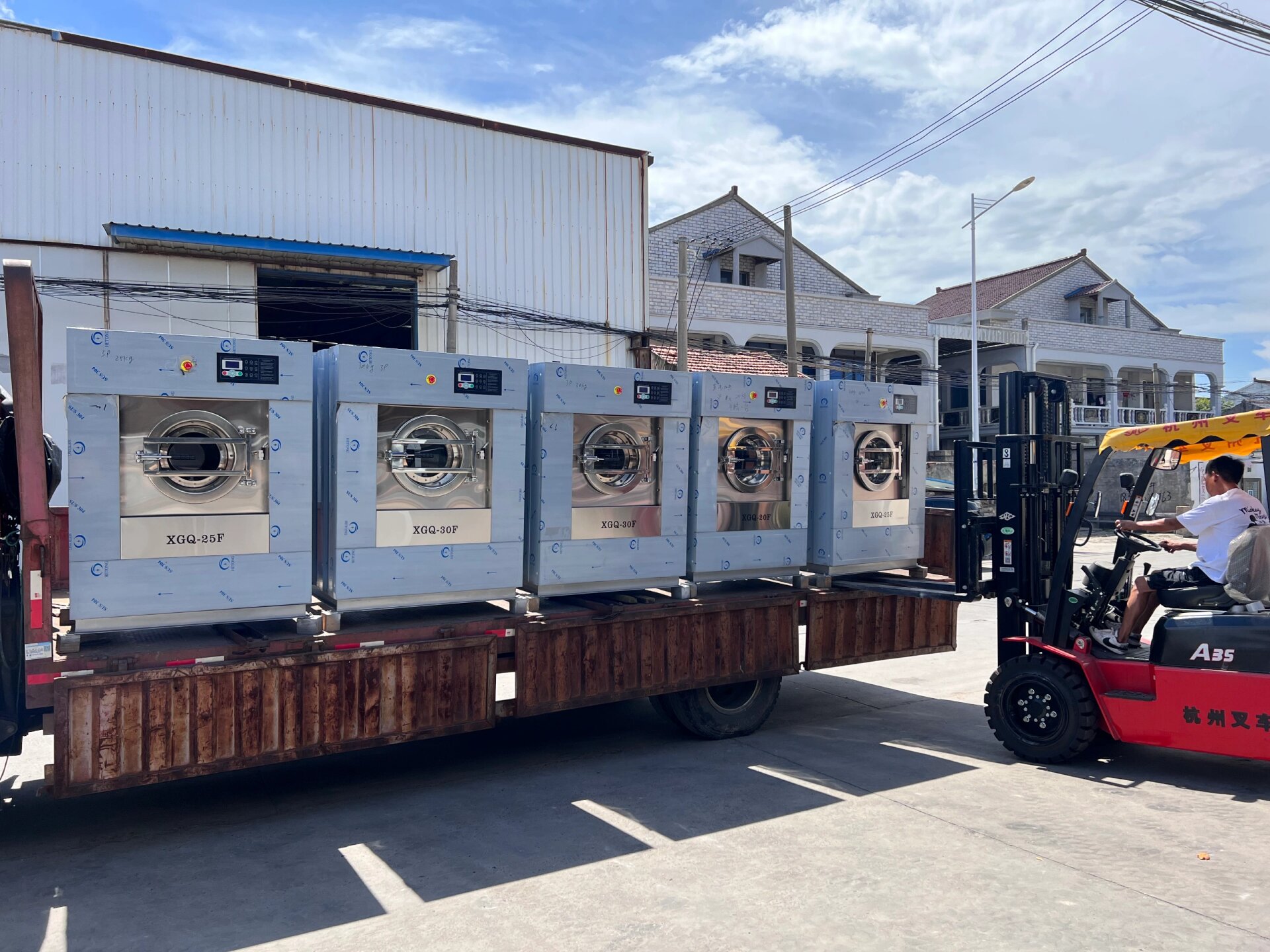
Three 100 kg fully automatic washer-extractors for washing and water extraction;
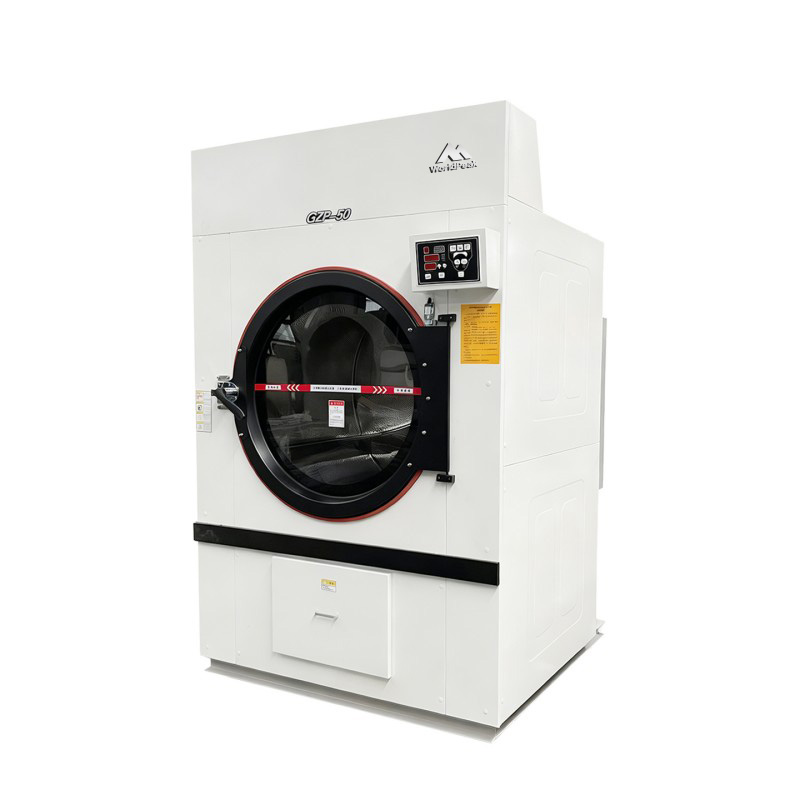
Three 100 kg fully automatic tumble dryers for towels, bath mats, and other terry items;
One double-roll steam-heated flatwork ironer for sheets, duvet covers, and pillowcases;
One towel folder to improve finishing efficiency;
One steam boiler, if a centralized steam supply is unavailable, along with sorting tables, linen carts, wastewater treatment equipment, and other supporting equipment.
Using mainstream Chinese equipment brands, a complete set of new equipment typically costs approximately $135,000–$195,000. If a local steam distribution network is available, eliminating the boiler can save $15,000–$30,000. Imported equipment can cost more than twice as much and is better suited to premium centralized laundry operations. Used equipment may reduce the initial investment by around 40%, but higher failure rates and uncertain service support make it a poor choice for first-time operators.
Facility and Renovation Costs
A laundry of this size needs approximately 400–600 square meters of industrial space. The layout must include separate areas for soiled linen, washing, clean linen, and finished goods, along with clear loading and unloading routes.
Rents for industrial buildings on the outskirts of Chinese cities commonly range from $3–$6 per square meter per month, resulting in monthly rent of approximately $1,200–$3,600. Rates vary considerably by city.
Facility improvements are a common source of budget overruns. Upgrading the 380V electrical system, installing steam piping, adding corrosion-resistant and slip-resistant flooring, and providing wastewater treatment facilities can cost approximately $22,500–$37,500 in total. Wastewater treatment is particularly important. As environmental requirements become stricter, operations cannot begin without the necessary approvals for compliant discharge. This is an expense that cannot be skipped.
Licenses, Permits, and Working Capital
Required approvals include a business license, a pollutant discharge permit, and a hygiene permit. Some regions also require an environmental impact assessment. Completing these procedures typically costs approximately $3,000–$7,500 and takes 1–3 months.
Working capital is one of the most frequently overlooked requirements. Hotels typically pay on a monthly billing cycle, and some hotel chains defer settlement by an additional month. Set aside 2–3 months of operating expenses, approximately $30,000–$45,000. Otherwise, taking on more orders can actually make cash flow tighter.
Overall, the initial investment for a standard laundry processing 1,000 hotel linen sets per day is approximately $180,000–$270,000, depending on equipment quality, local facility costs, and regulatory expenses.
How Much Does It Cost to Wash 1,000 Sets per Day?
Many operators count only water, electricity, and laundry supplies. In reality, labor, transportation, linen losses, and depreciation account for a substantial share of expenses. The following breakdown assumes an average of 1,000 sets per day and 26 operating days per month.
Energy Costs: 30%–35% of Revenue
Washing, drying, and ironing all depend on steam, making energy the largest individual operating expense.
Steam: Processing 1,000 linen sets requires approximately 7–8 metric tons of steam. With a biomass boiler, steam costs around $31.50 per metric ton, or roughly $225 per day. Purchased steam from a distribution network costs approximately $36–$45 per metric ton. Although the unit cost is slightly higher, it eliminates boiler maintenance and boiler operator labor.
Water and electricity: Equipment electricity consumption and wash water together cost approximately $45–$75 per day. Facilities in hard-water areas must also account for water-softening chemicals.
This works out to approximately $0.27–$0.33 in energy and utility costs per linen set, making this a key area for cost control.
Laundry Chemicals: 5%–8% of Revenue
This category includes main-wash detergent, bleach, fabric softener, laundry sour, and other required chemicals. Properly operated facilities following standard wash procedures typically spend approximately $0.045–$0.075 per linen set. Some smaller operations cut this cost in half by using low-quality industrial alkalis and inexpensive bleach. However, this can cause linens to deteriorate more than twice as quickly, creating substantial replacement liability and outweighing the initial savings.
Labor Costs: 20%–25% of Revenue
A facility processing 1,000 sets per day typically employs around 10 people: two sorting workers, two washer-extractor operators, three ironing and folding workers, two delivery drivers, and one production supervisor. A highly automated facility with automatic linen feeding and folding equipment may be able to reduce staffing by 2–3 positions.
Based on wage levels in second-tier Chinese cities, monthly pay averages $600–$750 per employee, bringing total monthly payroll to approximately $6,000–$7,500. This translates to around $0.195–$0.255 in labor costs per linen set. Rising labor costs are a major reason larger operators place increasing importance on automation.
Transportation Costs: 8%–12% of Revenue
Handling 1,000 sets per day generally requires two box trucks with 4.2-meter cargo bodies for hotel pickup and delivery. Fuel, vehicle depreciation, maintenance, and insurance together cost approximately $45–$60 per day, or $0.045–$0.06 per set. Costs can be lower when hotel customers are clustered together and delivery distances are short.
Depreciation, Fixed Overhead, and Hidden Costs
These expenses are easy to overlook, but they directly affect actual profitability:
Equipment depreciation: Assuming an eight-year service life, equipment costing $150,000 generates approximately $1,500 in monthly depreciation;
Facility rent and property management fees: Approximately $2,250 per month;
Routine maintenance, repairs, and replacement of wear parts: Approximately $750–$1,200 per month;
Linen wear and compensation: Normal wear-related losses are generally 1% or less. Including compensation for damaged, discolored, or missing items, these costs account for approximately 2%–3% of revenue. Higher-end hotels use more expensive linens, increasing replacement liability;
Taxes, administrative expenses, marketing, and miscellaneous costs: Approximately 5% of revenue.
In total, a laundry processing an average of 1,000 sets per day typically incurs monthly operating costs of approximately $15,000–$19,500, or $0.57–$0.75 per set. Well-managed facilities with effective energy controls can bring costs below $0.525 per set. Poorly managed operations with high rewash rates may exceed $0.825 per set—a substantial difference.
How Much Can a Commercial Laundry Earn?
Market Pricing
In China, hotel linen laundry pricing is closely tied to the city tier and the hotel's market segment:
Budget hotels: $0.75–$0.90 per set. This segment accounts for the largest volume and faces the strongest competition;
Midscale hotels: $0.90–$1.20 per set, with higher expectations for wash quality and delivery reliability;
Upscale and star-rated hotels: $1.20–$1.80 per set, with strict hygiene standards and linen care requirements, but greater profit potential.
Most services charge by the set, although some bill by item or weight. A standard guestroom linen set is generally used as the baseline pricing unit.
Revenue and Profit Projections
For this example, assume a typical midscale market rate of $0.90 per set, an average daily volume of 1,000 sets, and 26 operating days per month:
Monthly revenue: 1,000 × $0.90 × 26 = $23,400
Typical industry gross margins range from 35%–45%. After all operating expenses, depreciation, and taxes, a properly managed facility can achieve a net margin of 20%–28%. This corresponds to approximately $4,500–$6,750 in monthly net profit, or $52,500–$82,500 annually.
With a stable customer base of midscale and upscale hotels paying an average of $1.20 per set, monthly revenue can reach $31,200, while annual net profit may rise to $120,000–$150,000. Conversely, intense local competition may force prices down to $0.675 per set. Combined with weak management and high linen losses, this can leave net margins of just 5%–10%, generating very little profit.
Investment Payback Period
Using a midrange example of $195,000 in total investment and $75,000 in annual net profit, the payback period is approximately 2.5–3 years. With reliable customers, stronger pricing, and effective cost control, the initial investment may be recovered in 1.5–2 years. Businesses caught in price wars or struggling with poor management may take more than three years to recover their investment, or continue accumulating losses.
Economies of scale are significant in the laundry industry. Fixed costs for processing 500 sets and 1,000 sets per day are not dramatically different, with labor and rent remaining broadly similar. As volume increases, much of the additional revenue can translate into profit. This explains the industry saying: small laundries break even, while large laundries make money.
Hidden Risks to Understand Before Entering the Business
Many prospective operators calculate profits under ideal conditions and overlook the risks of day-to-day operations, only recognizing them after costly mistakes.
Environmental compliance risk: This is currently one of the largest uncertainties facing commercial laundries. Noncompliant wastewater discharge or air emissions can trigger corrective orders or even closure. Environmental impact assessment requirements and wastewater treatment compliance should be addressed from the outset. Cutting these costs in the hope of avoiding enforcement is not a sound approach.
Payment terms and cash flow risk: Hotels typically settle invoices monthly, and some chains defer payment for as long as two months, placing considerable pressure on working capital. Serving several large hotels at once means financing more operating expenses before receiving payment. Without sufficient cash reserves, a growing order book can quickly strain the business.
Seasonal demand fluctuations: Tourism markets can experience major differences between peak and off-peak seasons. Daily volume may exceed 1,200 sets during busy periods but fall to just 700–800 sets in the low season, while fixed expenses such as rent and payroll remain unchanged. The ability to break even during slow periods is critical to the survival of many smaller laundries.
Linen replacement liability: A single linen set for an upscale hotel can cost anywhere from several dollars to more than $15. One incident involving dye transfer or fabric damage can wipe out the profit from several wash loads. Inconsistent wash procedures and careless handling can lead to enough claims to consume the entire profit margin.
Employee turnover risk: Ironing and sorting are physically demanding jobs that many younger workers are reluctant to take. Experienced employees can be difficult to recruit and retain. Frequent turnover reduces productivity and can increase rewash rates and linen damage.
A commercial laundry processing 1,000 hotel linen sets per day is not a high-margin venture. It is a hands-on business that earns its returns through careful operational management. Its main advantage is customer retention: hotels generally avoid changing suppliers when service and quality remain consistent, supporting relatively stable revenue. However, the barriers to entry are substantial, including significant startup investment and demanding cost-control and management requirements.
Before entering the industry, look beyond the idealized financial projections provided by equipment suppliers. Assess the local hotel market, competitive landscape, and environmental requirements. If possible, spend time at an established laundry to understand the entire workflow. With a steady base of quality customers and control over the three core cost areas—energy, labor, and linen losses—this business can provide stable returns over the long term.